

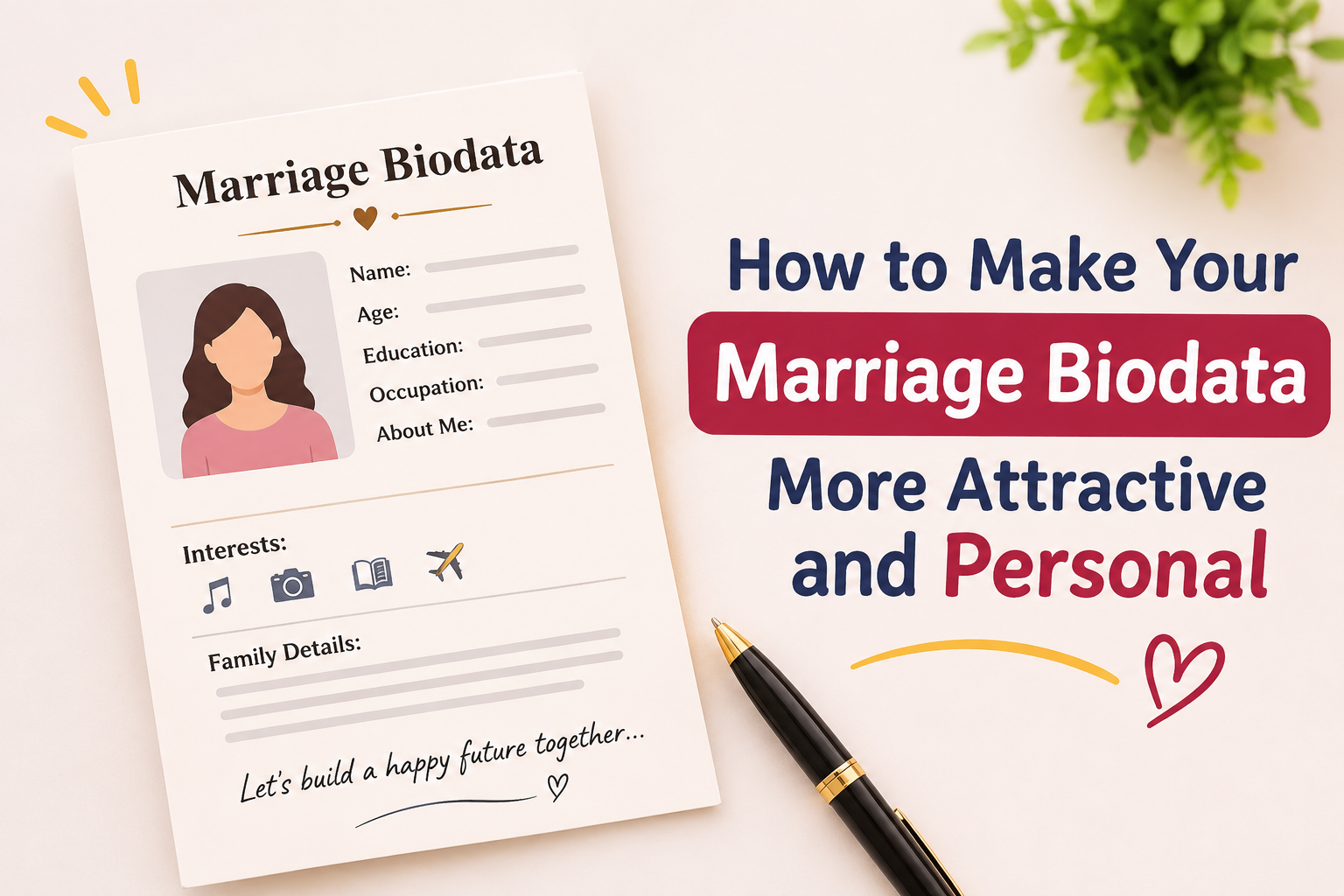
Creating a marriage biodata is not just about listing your qualifications, profession, and family details. It is also an opportunity to give a prospective match a glimpse of your personality and the life you want to build. A well-written biodata for marriage should feel clear, genuine, and personal without becoming too formal or lengthy. With a few thoughtful changes, you can make your profile more engaging while keeping the information relevant.
1. Write a Personal Introduction That Sounds Like You
Start with a short introduction that reflects your personality, interests, and outlook on life. Avoid relying entirely on common descriptions such as “simple,” “caring,” or “family-oriented.” Instead, explain what these qualities mean to you.
For example, you could mention that you enjoy weekend trips, trying new recipes, or spending evenings with family. If you value personal growth, share how you make time for learning or developing new skills.
Keep the introduction honest and conversational. You do not need to impress everyone; the aim is to help someone understand who you are.
2. Present Your Education and Career Clearly
Your education and profession are important parts of your biodata, but they do not need to take up the entire page. Mention your highest qualification, current occupation and professional interests in a few clear lines.
You can also include your future aspirations if they are relevant to your life plans. For instance, you might want to pursue further studies, grow your business or explore opportunities in another city.
Avoid making this section sound like a résumé. A brief overview that explains your current situation and ambitions is usually enough.
3. Add Interests That Reveal Your Personality
Hobbies can make your biodata more personal by giving a prospective match something to connect with. Instead of listing too many activities, choose two or three interests that genuinely reflect your lifestyle.
If you enjoy travelling, mention your interest in discovering local food or visiting historical places. If you like reading, you could share your favourite genres. You might also mention cooking, fitness, music, art or spending time outdoors.
Specific details make your profile more memorable and create natural opportunities for conversation.
4. Describe Your Family Background Naturally
Family information can provide useful context, especially when families are involved in the matrimonial process. Include relevant details about your parents, siblings and family background, depending on your preferences.
You can also add a short sentence about your family’s values. For example, you might describe your family as supportive of individual ambitions while maintaining close relationships.
Keep the wording warm and straightforward. You do not need lengthy descriptions or excessive personal details to communicate what matters to you.
5. Express Your Relationship Expectations Thoughtfully
An attractive biodata should communicate your expectations without sounding like a checklist of demands. Think about the values that matter most to you in a relationship, such as mutual respect, honest communication, emotional support and shared responsibilities.
You may also mention practical preferences, including career plans, relocation or how you imagine balancing work and family life.
Keep your wording considerate and realistic. Rather than describing a perfect partner, focus on the kind of relationship you hope to build together.
6. Choose a Clean and Appealing Design
The visual presentation of your biodata can make the information easier to read. Choose a simple layout with clear headings, consistent fonts and enough white space between sections.
Use one or two complementary colours if you want to add personality. Avoid excessive decorations, multiple font styles or crowded paragraphs that make important details difficult to find.
A recent photograph with good lighting and a simple background can also make the document feel more personal. Choose an image that represents you naturally rather than relying on heavy editing.
7. Include Horoscope Details If They Matter to You
Some individuals and families prefer to include astrological information as part of their matrimonial introduction. If horoscope matching is relevant to you, consider adding your date, exact time and place of birth, along with your rashi or nakshatra if required.
Check these details for accuracy before sharing your biodata. If you need help understanding your birth chart, you can consult an astrologer.
Astrology is a personal or family preference, so this section is optional. Your biodata can remain equally personal and informative without it.
8. Keep Your Information Genuine and Up to Date
Before sharing your biodata, review every section to make sure the details are accurate and reflect your current circumstances. Update changes in your profession, education, city or personal preferences when necessary.
Read your introduction aloud to check whether it sounds natural. You can also ask someone you trust to review the document for clarity and spelling errors.
Finally, be mindful of privacy. Include only the information you are comfortable sharing, and avoid adding sensitive details simply to make your profile appear more complete.
Final Thoughts
Making your marriage biodata more attractive is less about elaborate designs and more about presenting yourself honestly. A clear introduction, specific interests, thoughtful relationship expectations and a simple layout can help your profile feel personal without becoming overwhelming. You can also turn to Astroyogi for astrology resources if horoscope-related guidance is part of your matrimonial journey. Ultimately, your biodata should reflect who you are today and offer a natural starting point for a meaningful connection.