

Summary
Sending expensive or irreplaceable goods requires a shipping process that considers security, insurance, packaging and delivery accountability. A tracking number alone does not guarantee that a shipment is protected against loss or damage. Senders should understand the carrier’s service conditions, confirm the available insurance or declared-value protection, document the contents and choose packaging suited to the item. UNIVAL Logistics helps customers assess these important details and plan shipments with greater confidence. Whether the package contains jewelry, watches, electronics, artwork, business equipment or other valuable goods, preparation is essential to reducing avoidable risks.
Overview
The decision to ship high-value goods should begin with an assessment of the item’s worth, physical characteristics, destination and delivery requirements. A small parcel containing jewelry may need different security measures from a large package containing specialist equipment. Fragile items require protective cushioning, while sensitive or restricted goods may have specific carrier acceptance rules.
Across the United States, businesses and individuals send valuable packages for retail orders, repairs, exhibitions, business transactions and personal deliveries. Shipments may originate from or travel to major commercial areas, including Los Angeles, New York, Miami, Chicago, Dallas, Houston, Philadelphia, Atlanta, Las Vegas, San Francisco, Boston, Newark and Northern New Jersey. Regardless of the route, the sender should confirm service availability, coverage conditions and delivery procedures before dispatch.
UNIVAL Logistics emphasizes a planned approach that considers the complete shipment journey rather than focusing only on the transportation stage. The right preparation can help reduce exposure to theft, mishandling, loss, delays and insurance disputes.
Key Takeaways
- Assess the shipment’s value, fragility and handling requirements before booking.
- Choose packaging that protects the item against movement, impact and environmental exposure.
- Check whether the selected shipping service accepts the item and its declared value.
- Understand the difference between carrier declared value and insurance coverage.
- Keep invoices, photographs, serial numbers and shipment records.
- Use tracking and delivery verification to improve shipment accountability.
- Review exclusions, claim deadlines and packaging requirements before dispatch.
- Work with UNIVAL Logistics to plan suitable shipping arrangements for valuable goods.
Quick Answer
To ship valuable packages safely and with suitable insurance, use secure packaging, accurate documentation, an appropriate shipping service, confirmed coverage, shipment tracking and verified delivery procedures.
Why High-Value Packages Need Extra Protection
A valuable package can face several risks while moving through a shipping network. These risks may arise during collection, warehouse processing, sorting, vehicle transfers, temporary storage or final delivery. Even when a carrier provides tracking, tracking information does not prevent every incident or automatically guarantee reimbursement.
The financial impact of a lost or damaged shipment can extend beyond the item’s purchase price. A business may face replacement expenses, customer dissatisfaction, delayed repairs, missed deadlines or disruption to its operations. For personal shipments, the package may contain an item with sentimental or practical importance that is difficult to replace.
A planned process helps address these risks before dispatch. When customers ship high value packages, they should consider the item’s replacement value, the consequences of a delivery failure and the level of protection needed throughout transit. UNIVAL Logistics can help customers consider these requirements when arranging a suitable shipping solution.
Common Risks During Transit
The most common concerns include theft, loss, accidental damage, incorrect delivery and delays. Fragile goods may be damaged if internal cushioning is insufficient. Poorly sealed cartons can open during handling, while unclear labels may contribute to routing problems. An unattended delivery location can also increase the risk of a package being taken after delivery.
Some risks are related to the item itself. Jewelry, watches, precious metals, electronics and specialist equipment may attract additional attention or require specific handling. Senders should avoid assuming that every standard parcel service accepts every type of valuable item or provides the same level of protection.
Step 1: Assess the Item and Its Shipping Requirements
Before selecting a carrier or preparing a package, identify exactly what is being shipped. Record the item’s description, quantity, condition, approximate dimensions, weight and value. These details help determine the packaging, service level and insurance requirements.
The item’s value should be supported by appropriate evidence. Depending on the goods, useful records may include a purchase invoice, sales receipt, professional valuation, repair estimate or other documentation accepted by the insurer or shipping provider. For used or unique items, the method used to establish value may differ from the original purchase price.
Identify Fragile, Restricted or Sensitive Goods
Different products require different precautions. Glass, ceramics and artwork need impact protection. Watches and jewelry may require discreet packaging and careful documentation. Electronics may need protection against static, moisture and physical shock. Medical or specialist equipment may require handling instructions and additional packaging controls.
Check the carrier’s prohibited and restricted item rules before booking. Some services have limits or special conditions for jewelry, precious metals, cash, antiques, artwork, batteries and other high-value or sensitive goods. Insurance may not apply if an item is prohibited, incorrectly described or shipped in breach of the service terms.
Step 2: Use Secure, Appropriate Packaging
Packaging is one of the most important parts of protecting a valuable shipment. A strong outer carton is not enough if the item can move freely inside it. The complete package should be designed to reduce the risk of impact, pressure, vibration and exposure to moisture.
Choose a new or structurally sound box that is suitable for the item’s weight and dimensions. Use cushioning materials that absorb impact and prevent movement. Fragile objects should be protected individually, with enough space between the item and the outer walls of the carton. Heavy goods may require reinforced packaging or specialist crating.
Protect the Contents and Seal the Package
Wrap the item in suitable protective material before placing it inside the shipping container. Fill empty spaces so the contents cannot shift during handling. For delicate or unusually shaped goods, consider professional packing advice. Artwork, instruments and specialist equipment may require custom packaging rather than a standard cardboard box.
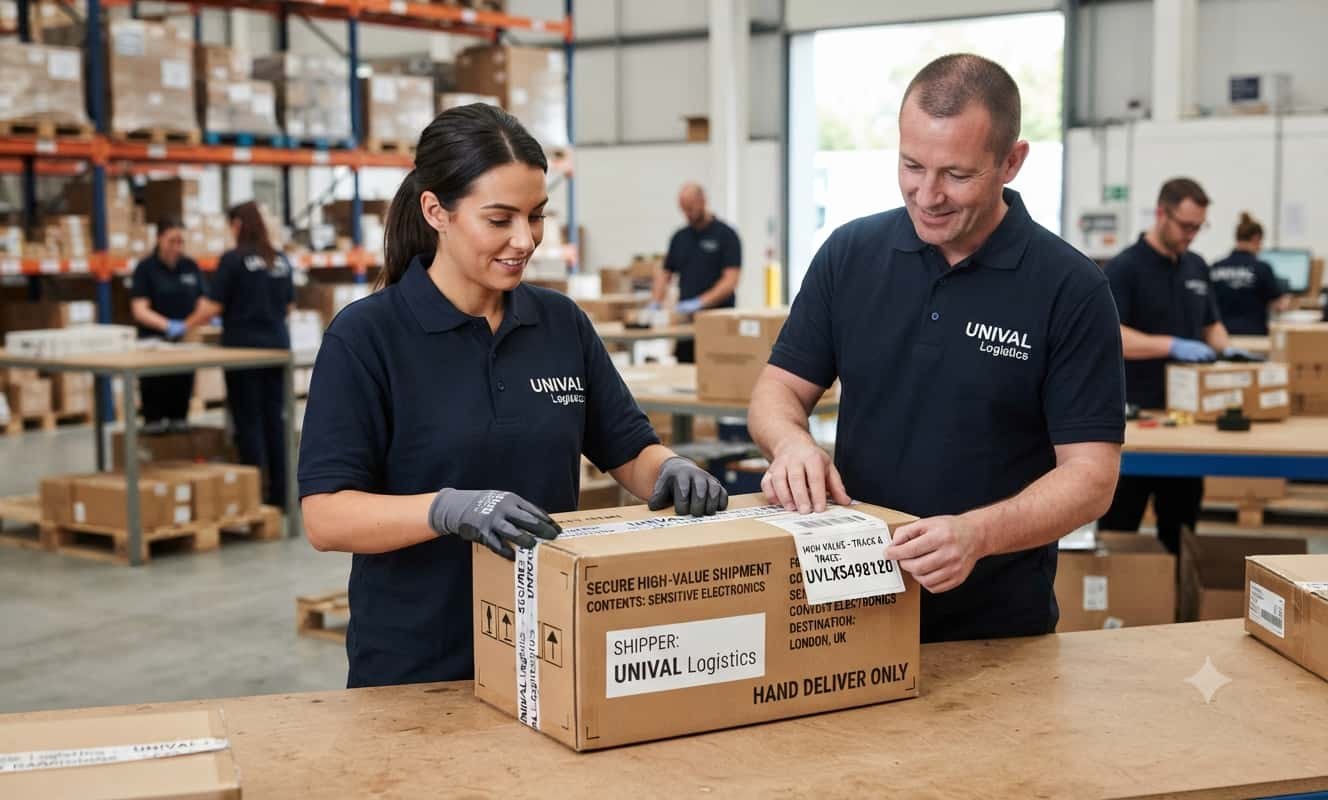
Use strong packing tape and secure all openings. Avoid relying on decorative wrapping, weak cartons or reused packaging that has lost its strength. Include any required internal documentation without exposing sensitive information on the outside of the parcel.
Discreet external packaging can reduce unnecessary attention, but it must not compromise carrier rules, required labels or safe handling. Accurate shipping labels and legally required declarations should always be provided.
Step 3: Choose the Right Shipping Service
Not every parcel service is suitable for every valuable item. Compare services based on acceptance rules, handling options, transit arrangements, delivery confirmation, coverage conditions and the level of support available if something goes wrong.
A standard parcel service may be appropriate for some shipments, but higher-value or sensitive goods can require more specialized arrangements. Consider whether the shipment needs scheduled collection, restricted delivery, signature confirmation, enhanced handling or a dedicated transport solution. The right choice depends on the item, route, value and delivery requirements.
Review Carrier Limits Before Booking
Carriers may set maximum declared values, item-specific restrictions and exclusions. These conditions can vary by service, destination and shipment type. A carrier’s standard liability may also be different from the amount a sender expects to recover after a loss.
Before booking, confirm that the carrier accepts the item and that the requested value can be declared under the selected service. Check whether additional coverage is available and whether the item requires special packaging, documentation or collection procedures.
UNIVAL Logistics can help customers review shipment requirements and consider suitable arrangements. The objective is to match the shipping method with the actual value and risk of the goods rather than choosing a service based on price or delivery speed alone.
Step 4: Understand Shipping Insurance and Declared Value
Insurance is an important consideration when arranging valuable shipments, but the terms should be understood before the package is handed over. A declared-value option is not automatically the same as a separate insurance policy. Depending on the carrier and service, declared value may establish a limit on the carrier’s liability, while a separate insurance arrangement may provide coverage under its own policy wording.
The available protection depends on the contract, policy, item category, declared amount and applicable exclusions. Some policies may require proof of value, evidence of appropriate packaging and compliance with shipping conditions. Certain goods or circumstances may be excluded.
Confirm What the Coverage Actually Protects
Before paying for coverage, review the following details:
- Covered events: Check whether the policy covers loss, theft, physical damage or only specified incidents.
- Coverage limit: Confirm the maximum amount payable and whether it reflects the item’s supported value.
- Exclusions: Review restrictions involving particular goods, inadequate packaging, unattended deliveries or prohibited items.
- Deductibles: Check whether you must pay an excess or deductible before a claim can be settled.
- Claim requirements: Understand the evidence, reporting process and time limits.
- Territorial scope: Confirm that the policy applies to the shipment’s origin, destination and route.
Do not assume that purchasing extra protection guarantees full reimbursement. The insurer or carrier may assess a claim according to the applicable terms, proof of value and evidence of loss or damage. If a shipment contains several items, confirm whether coverage applies to the total package value or has item-level limits.
Keep Evidence of the Item’s Value
Retain invoices, receipts, valuation documents and relevant sales records. For products with serial numbers, record those numbers before packing. Take clear photographs of the item from multiple angles and photograph its condition before dispatch. For fragile or high-value goods, photographs of the packaging process can also help establish how the item was prepared.
These records can support a claim, but they do not guarantee approval. Follow the insurer’s documentation requirements and retain copies of all booking and shipment confirmations.
Step 5: Maintain Tracking and Delivery Accountability
Tracking helps senders monitor a parcel’s progress and identify possible delays. However, tracking should form part of a broader delivery-control process. A tracking scan does not always confirm who physically received the package or whether the item arrived in the expected condition.
Select an appropriate delivery confirmation option. Depending on the service, this may include a recipient signature, identity check, restricted delivery or another proof-of-delivery procedure. Make sure the delivery address is correct and that someone authorized can receive the parcel.
Prepare for a Successful Handover
Confirm the recipient’s name, contact details and delivery instructions before dispatch. For business deliveries, identify the person or department responsible for accepting the shipment. Avoid leaving valuable packages in exposed locations when a more controlled delivery option is available.
Once delivered, the recipient should inspect the outer packaging promptly. If there is visible damage, record it with photographs and follow the carrier’s reporting procedure. Keep the packaging and internal materials until the item has been checked and any potential issue has been addressed.
Step 6: Prepare a Clear Shipping Record
Good documentation improves accountability and helps resolve questions about a shipment. Create a record that includes the item description, quantity, value, condition, package dimensions, weight, recipient information and selected service.
For business shipments, connect the shipping record with the relevant order, repair authorization, purchase document or inventory reference. This is especially useful when a company sends multiple high-value parcels or handles goods on behalf of customers.
When businesses ship high value packages regularly, a consistent documentation process can reduce errors and make it easier to identify missing information. It also helps staff confirm that the correct item was packed, the correct value was declared and the appropriate service was selected.
How UNIVAL Logistics Supports Safer Valuable Shipments
Shipping valuable goods involves more than choosing a delivery speed. Customers need to consider the item, route, packaging, documentation, coverage and delivery process together. UNIVAL Logistics helps customers approach these decisions with attention to shipment requirements and practical risk controls.
The right arrangement may differ for a jewelry shipment, a luxury watch, fine art, business electronics or specialist equipment. UNIVAL Logistics can help customers review the nature of the goods, discuss handling requirements and consider suitable shipping options. Customers should confirm the exact services, coverage availability, item acceptance rules and delivery conditions for each shipment before booking.
A clear plan can also help businesses manage repeat shipments. Standardized packing procedures, consistent valuation records and clear delivery instructions can support a more reliable process. For organizations that regularly send valuable products, this approach can improve operational control and customer confidence.
Common Mistakes to Avoid
One common mistake is assuming that a tracking number means a package is fully protected. Tracking provides shipment-status information, but it does not replace insurance or establish that every loss will be reimbursed.
Another mistake is declaring an inaccurate value. An unsupported or incorrect amount can create complications if a claim is made. The declared value should be consistent with the documentation and the terms of the selected coverage.
Weak packaging is another avoidable problem. A high-value item can be damaged even when the outer carton appears secure. Internal movement, inadequate cushioning and unsuitable materials can increase the risk of damage.
Senders should also avoid overlooking exclusions and claim deadlines. Coverage may be limited by item type, packaging standards, delivery circumstances or reporting requirements. Review the applicable conditions before dispatch, not after an incident occurs.
Finally, do not leave delivery arrangements to chance. Confirm the recipient, address and handover requirements in advance. A controlled delivery process is especially important when the package is difficult or expensive to replace.
How Much Does It Cost to Ship and Insure Valuable Packages?
The cost of a valuable shipment depends on several factors. There is no single reliable price for every package because the amount can change according to its dimensions, weight, value, destination, service level, handling needs and insurance terms. A small parcel containing a valuable watch may have different requirements from a large shipment of specialist equipment.
When planning a shipping budget, consider these main cost categories:
- Base transportation charge: Depends on package weight, dimensions, origin, destination and selected delivery speed.
- Insurance or declared-value charge: Depends on the available protection, declared amount, item category and applicable policy conditions.
- Special packaging: May include protective materials, reinforced cartons, custom inserts or professional packing.
- Special handling: May apply when the shipment needs additional security, scheduled collection, restricted delivery or specialist transportation.
- Additional service fees: May include signature confirmation, remote-area charges, special collection arrangements or other service-specific fees.
Before confirming a shipment, request a clear quotation that identifies the transportation charge, any additional service fees and the cost of available protection. Compare the total service value rather than looking only at the initial delivery price. UNIVAL Logistics can help customers discuss shipment requirements and identify the relevant cost considerations before arranging transportation.
Important Disclaimer
All cost figures or pricing information provided for shipping and insurance should be treated as baseline estimates only, not guaranteed quotations. Actual prices are subject to market fluctuations, supplier changes, carrier conditions and variable logistics fees. Insurance availability, coverage limits, exclusions and charges may also change according to the shipment and applicable policy terms. Contact UNIVAL Logistics for the latest and most accurate prices, service details and shipment-specific guidance before booking.
Final Thoughts
Protecting a valuable package requires careful preparation at every stage, from assessing the item and choosing suitable packaging to confirming insurance conditions and arranging a controlled delivery. A tracking number or a higher declared value alone does not guarantee complete protection. The sender must understand the selected service, comply with its requirements and retain evidence that supports the shipment’s description and value.
When you need to ship high value packages, take time to review the complete shipping process before dispatch. Confirm item acceptance, coverage, packaging standards, documentation and delivery arrangements. UNIVAL Logistics can help customers consider these requirements and plan shipping solutions around the needs of valuable goods. A well-prepared shipment is better positioned for a secure, accountable and reliable journey.
Frequently Asked Questions
1. What is the safest way to ship a high-value package?
The safest approach combines suitable packaging, a shipping service that accepts the item, appropriate insurance or declared-value protection, accurate documentation, tracking and verified delivery. The exact measures depend on the item’s value, fragility and destination.
2. Is declared value the same as shipping insurance?
No. Declared value and insurance are not necessarily the same. Declared value may establish a carrier’s liability limit under a particular service, while a separate insurance policy has its own coverage terms, limits and exclusions. Always review the applicable conditions before booking.
3. Can I insure a package for its full purchase value?
Possibly, but this depends on the carrier or insurer, the type of item, the available coverage limit and the evidence of value. Some goods may have special restrictions or exclusions. Confirm eligibility and the maximum available coverage before sending the package.
4. What documents should I keep when shipping valuable goods?
Keep the purchase invoice, receipt, valuation document where applicable, photographs, serial numbers, booking confirmation, tracking details and proof of delivery. These records can help establish the item’s identity, condition and value if a problem occurs.
5. Does tracking protect a package against theft?
Tracking helps monitor a shipment’s progress, but it does not physically prevent theft or guarantee reimbursement. Consider suitable insurance, controlled delivery, recipient verification and other security measures alongside tracking.
6. How should I package jewelry, watches and electronics?
Use protective materials suited to the item, prevent movement inside the package and choose a strong outer container. Electronics may need protection against static and moisture, while jewelry and watches require careful cushioning and discreet external packaging. Check carrier rules and any insurer packaging requirements before dispatch.
7. What happens if a valuable package is lost or damaged?
Contact the carrier or insurer promptly and follow the required reporting process. Keep the packaging, photographs, invoices, tracking information and other supporting records. Claims must meet the applicable reporting deadlines and policy conditions, so review those requirements as soon as an issue is identified.
8. Is special delivery confirmation necessary for valuable shipments?
It can be an important safeguard. Signature confirmation, restricted delivery or another available recipient-verification option can improve accountability. Choose a service that provides the level of confirmation appropriate for the shipment and its recipient.
9. How can I reduce the cost of shipping valuable goods without compromising protection?
Use packaging that is appropriately sized and strong, provide accurate shipment details, compare suitable service options and avoid paying for features that do not meet the shipment’s actual needs. Do not reduce essential protection or choose a service that cannot accept the item simply to lower the price.
10. Can UNIVAL Logistics help arrange shipping for valuable goods?
UNIVAL Logistics can help customers review shipping requirements and consider suitable arrangements for valuable goods. Contact the company to discuss the item, destination, packaging needs, available services and insurance considerations before booking.