

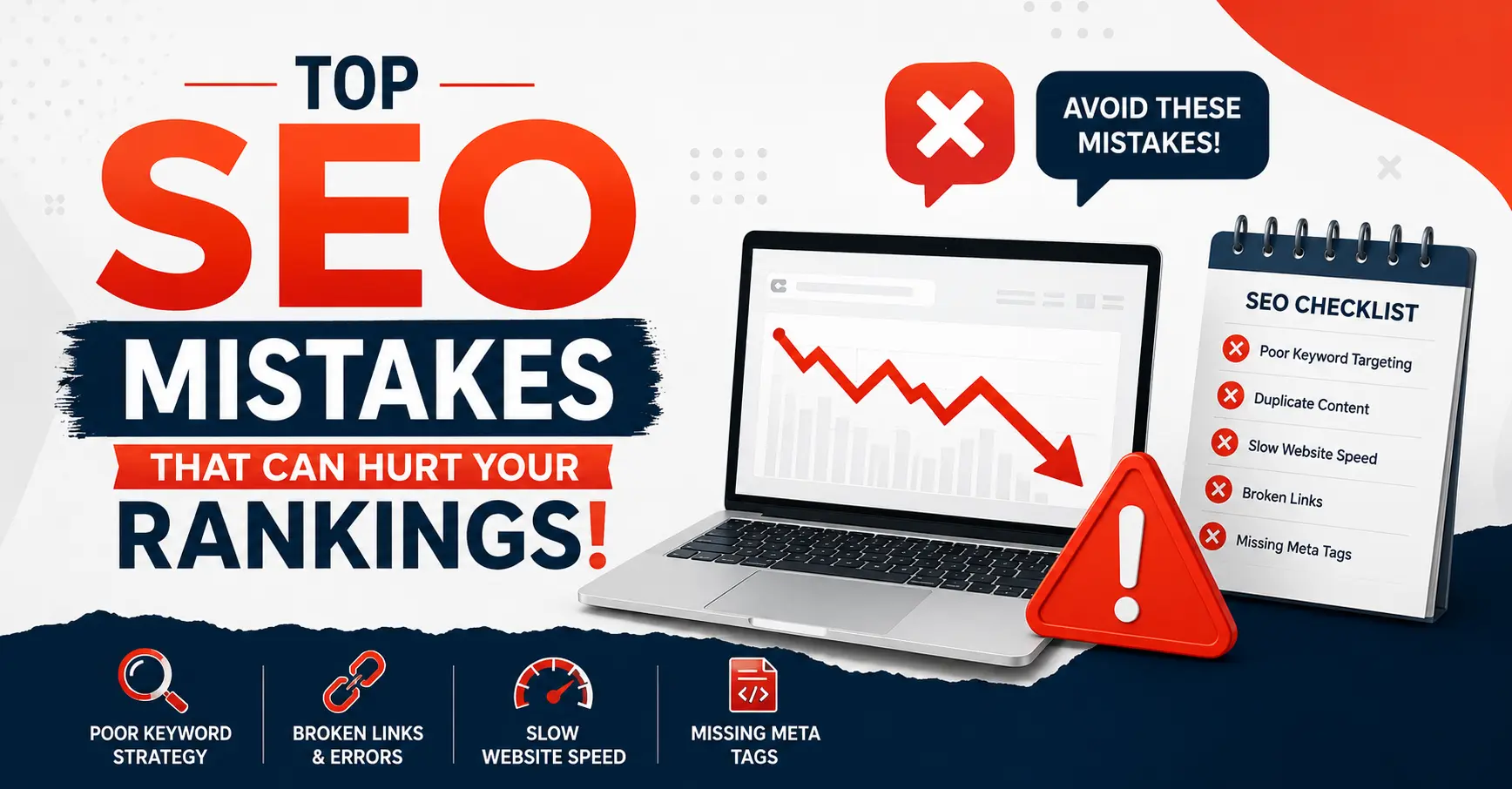
Achieving and maintaining high search rankings requires a commitment to quality that transcends simple keyword manipulation. Search algorithms have evolved to prioritize the actual utility of your content, meaning that outdated tactics no longer work and often result in significant ranking penalties. To build lasting visibility, you must identify and eliminate the technical and strategic errors that undermine your site’s credibility.
Prioritizing Keywords Over User Intent
Many site owners fall into the trap of obsessing over keyword volume while ignoring what the user is actually trying to accomplish. When content is engineered solely to satisfy a search bot, it often results in an unnatural reading experience that causes visitors to bounce immediately. High search rankings are impossible to sustain if your visitors do not find the information they originally sought.
Avoid these common strategic errors to keep your content aligned with user needs:
-
Keyword Stuffing: Artificially repeating specific phrases throughout a page disrupts the flow of your writing and signals to search engines that your content lacks substance.
-
Ignoring Query Intent: Producing a sales page for a query that clearly demands an informational answer prevents you from matching the searcher’s mindset.
-
Thin Content: Publishing pages with minimal text or low-value information fails to meet the threshold of helpfulness that modern algorithms demand.
-
Mismatched Meta Data: Using titles and descriptions that do not accurately reflect the content on the page confuses users and leads to a loss of trust.
Technical Weaknesses That Limit Crawlability
Even the best-written content will struggle if search engines cannot effectively access or understand your site structure. Technical SEO serves as the foundation for your visibility, and flaws here can effectively wall off your best pages from organic search traffic. Addressing these backend issues is essential for ensuring your site remains healthy and competitive.
Follow this checklist to secure your site’s technical foundation:
-
Slow Page Speed: If your site takes too long to load, visitors will leave, and search engines will deprioritize your pages in favor of faster alternatives.
-
Broken Internal Links: Dead links create frustrating dead ends for both users and search engine crawlers, wasting your “crawl budget” on non-existent pages.
-
Missing or Duplicate Alt Text: Failing to describe your images hinders accessibility and misses opportunities to signal context to search algorithms.
-
Poor Mobile Responsiveness: With a massive share of traffic coming from handheld devices, a site that is difficult to navigate on a phone will be penalized.
Neglecting E-E-A-T and Originality
Search engines look for evidence of Experience, Expertise, Authoritativeness, and Trustworthiness (E-E-A-T). When you rely on generic information or rewrite existing content without adding personal insights, you fail to provide a unique perspective. Modern SEO requires you to demonstrate that you possess deep, real-world knowledge on the topics you cover.
Creating original, high-quality content involves more than just assembling facts. It requires synthesizing information in a way that provides new utility to the reader. Avoid simply paraphrasing other sites; instead, leverage your own professional experience, proprietary data, or unique case studies to anchor your content. When you consistently deliver insights that cannot be found elsewhere, you naturally build the authority that search engines reward. Regularly auditing your site to remove low-value, duplicate, or outdated pages also helps concentrate your site’s “authority score,” ensuring that your best work receives the recognition it deserves.
Conclusion
Ranking on search engines is a marathon, not a sprint, and avoiding these common mistakes is the best way to secure your position. By focusing on genuine user intent, maintaining a flawless technical environment, and prioritizing unique value, you build an asset that grows in authority over time. Stay consistent, audit your site for errors, and always put the reader’s experience first.
FAQs
What is the most harmful SEO mistake? The most harmful mistake is creating low-value, thin content that provides no genuine utility to the user. Search engines are designed to identify and filter out content that does not satisfy user needs.
How does site speed affect my rankings? Search engines prioritize user experience, and a slow-loading site causes users to leave quickly. Faster pages lead to higher engagement, which signals to search engines that your site is high-quality.
Can I fix keyword stuffing by just removing the extra words? Often, yes, but you may also need to rewrite the sentences to ensure they sound natural and provide better clarity for the reader.
What is the best way to improve E-E-A-T? Demonstrate your real-world experience and professional credentials. Use your own unique data, personal insights, and clear, authoritative writing to show that you are an expert on the subject.
How often should I audit my site for technical SEO mistakes? Perform a full technical audit at least quarterly. This helps you identify new broken links, speed issues, or indexing problems before they become significant obstacles to your traffic.