
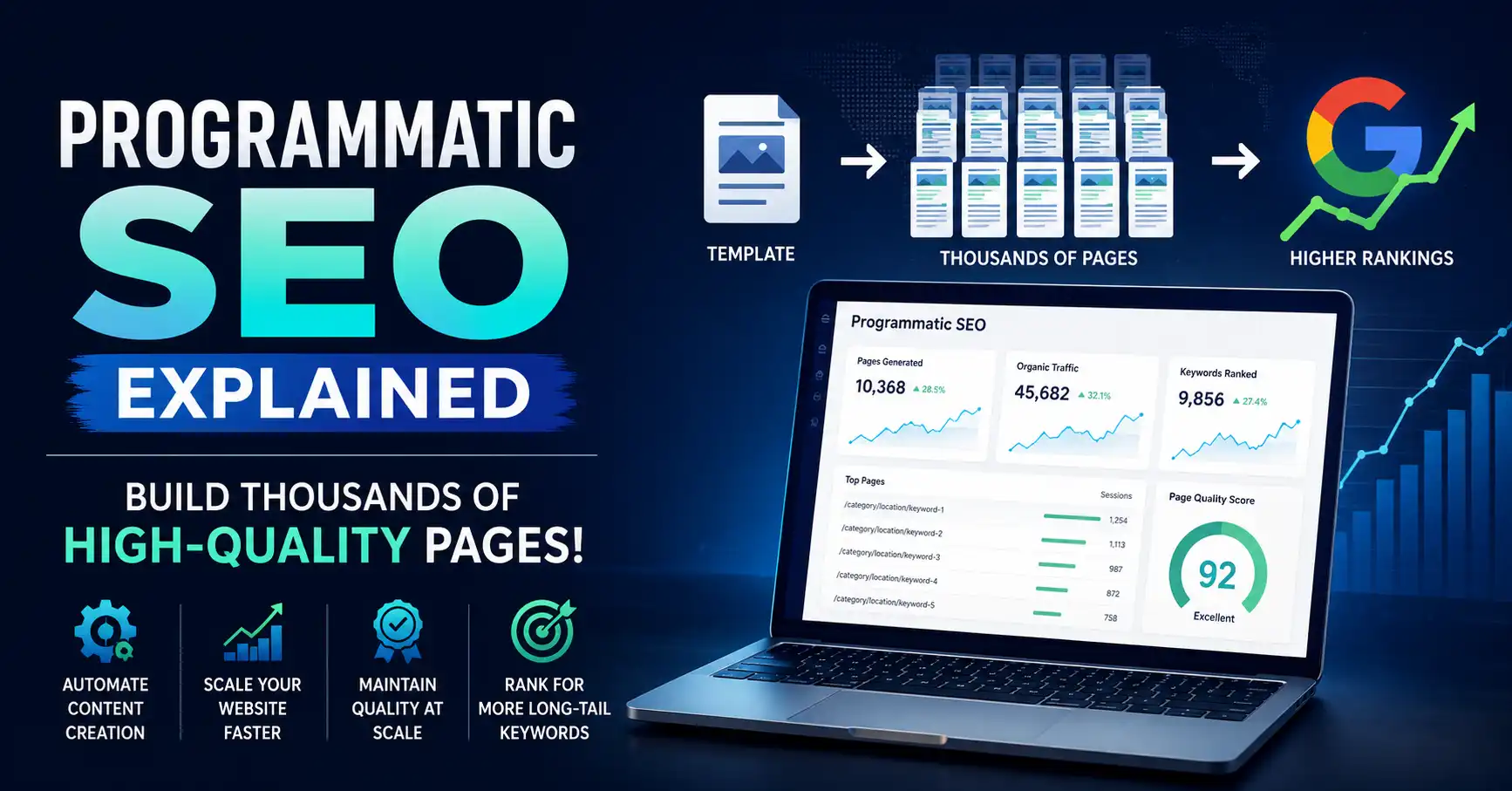
Programmatic SEO is a method of generating high volumes of landing pages by leveraging structured data and templates. Instead of manually writing individual articles, you combine a database of unique information with a carefully designed page structure to serve specific user needs. When executed correctly, this approach captures “long-tail” search intent at a scale impossible to achieve through traditional content production, allowing you to dominate entire search niches.
The Foundation of High-Quality Programmatic Growth
Success with this strategy depends entirely on the utility of the data you provide. Simply generating pages that look similar will trigger search engine quality filters. To thrive, every page must offer genuine value, meaning the information displayed must be accurate, unique, and highly relevant to the search query that brought the user there.
Focus on these essential components to ensure your programmatic pages remain valuable:
-
Meaningful Variable Data: Ensure your database contains specific, granular details that differentiate one page from another, rather than just repeating generic phrases.
-
User-Centric Design: Build templates that prioritize readability and utility, ensuring that the programmatic output looks and feels like a bespoke resource.
-
Logical Taxonomy: Organize your page structure so that the internal link architecture clearly maps out relationships between related categories and subcategories.
-
Unique Supplemental Content: Integrate sections that pull in dynamic, context-specific information to keep the content fresh and distinctive for each specific URL.
Structuring Your Data for Maximum Search Impact
Building the infrastructure requires a disciplined approach to data management. You must translate your raw data into a narrative that directly answers a specific user question. This process requires a strong understanding of semantic search, as each generated page needs to be clearly distinct in the eyes of search algorithms.
Follow this workflow to build your programmatic architecture:
-
Define Your Keywords: Identify clusters of intent that share a common structure, such as “best [service] in [city]” or “[software] for [industry].”
-
Clean Your Data Sets: Scrub your database for errors, duplicates, or missing information, as a single bad data point can degrade the quality of hundreds of pages.
-
Build a Master Template: Design a page layout that highlights the variable data as the primary focus, supported by static content that provides context.
-
Implement Server-Side Rendering: Ensure your pages load quickly and are easily crawlable by search engines by using robust technical foundations.
-
Monitor Page Performance: Analyze crawl rates and indexation status to confirm that search engines are finding and trusting the new content layers.
Navigating the Quality Challenges of Automation
Maintaining a massive library of pages requires ongoing technical governance. As your site grows, the risk of “thin content” increases if your variables become too repetitive. Regularly review your programmatic output to ensure that the content remains helpful. If a specific subset of pages is not gaining traction, it is often a signal that the intent match is weak or the data provided is insufficient for the user’s needs.
Continuous improvement is vital. Add unique human-written elements, such as expert commentary or summarized industry insights, to the templates to heighten the E-E-A-T profile of the entire site. Balancing the speed of programmatic generation with the nuance of editorial quality creates a sustainable competitive moat. When you successfully blend automation with high-intent data, your site becomes a comprehensive authority that search engines prioritize for thousands of different queries.
Conclusion
Programmatic SEO offers a transformative way to scale your content footprint, provided you prioritize user intent over raw volume. By focusing on high-quality data structures and providing genuine utility on every single page, you can capture significant organic search traffic. Use this methodology as a tool for efficiency, always ensuring that the final output serves the visitor better than any generic page could.
FAQs
What is the main difference between traditional and programmatic SEO? Traditional SEO involves manually writing individual pages, while programmatic SEO uses a data-driven approach to generate many pages based on a template and a database.
Will Google penalize me for using programmatic SEO? Google penalizes low-quality content, not automation itself. If your programmatic pages are helpful, unique, and provide value to the user, they will perform well.
How do I choose a niche for programmatic SEO? Look for sectors with high-volume, repetitive search queries that require specific data, such as real estate, software comparisons, or travel directories.
How can I make programmatic pages feel human? Incorporate unique sections into your templates, use natural-sounding headings, and ensure your data-driven content is presented in a helpful, conversational format.
What is the most important technical requirement for this strategy? Clean data and fast, reliable server-side rendering are critical. If your data is messy or your pages load slowly, search engines will struggle to index and rank your content effectively.