
The way people watch entertainment on their phones is changing. Many viewers no longer want to commit to a full-length episode or movie every time they open a streaming app. Instead, they enjoy short stories that deliver drama, suspense and emotional moments in just a few minutes.
This shift has created an opportunity for businesses interested in launching their own entertainment platforms. Vertical drama apps bring scripted storytelling into a mobile-first format, with short episodes designed for viewers who prefer quick, engaging content.
For entrepreneurs, media companies and digital entertainment businesses, vertical drama app development offers a way to build a focused streaming product around this viewing behaviour. However, launching a successful platform involves more than creating a video player. Businesses need to consider content strategy, user experience, monetisation, technology infrastructure and audience retention from the beginning.
What Is a Vertical Drama App?
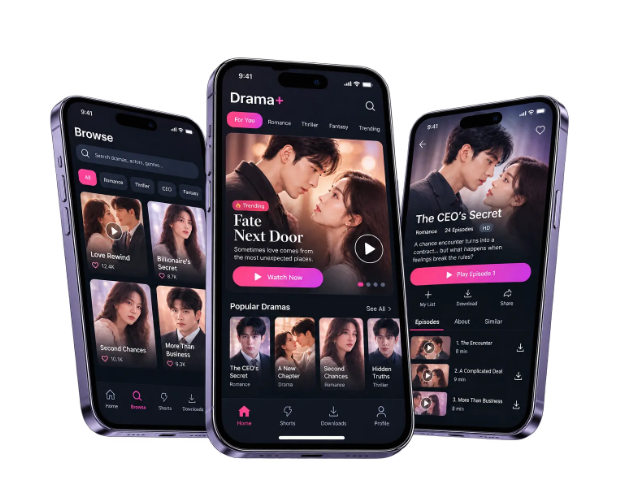
A vertical drama app is a mobile entertainment platform that delivers scripted video stories in a portrait format, usually designed for smartphone screens.
Unlike traditional streaming services, which mainly focus on films and longer episodes, vertical drama platforms organise stories into short instalments. Episodes commonly last around one or two minutes, allowing viewers to follow a storyline during short breaks or while travelling.
These platforms often use several storytelling and product features:
- Portrait video: Content is produced in a 9:16 format for mobile viewing.
- Short episodes: Each instalment delivers a plot development or dramatic moment.
- Serial storytelling: Episodes are connected into longer stories with recurring characters.
- Swipe-based navigation: Viewers move between episodes through simple gestures.
- Unlockable content: Some platforms restrict later episodes through coins, subscriptions or other payment models.
- Personalised recommendations: The app can suggest stories based on viewing behaviour and preferences.
The format combines elements of traditional television storytelling with the convenience of short-form mobile video.
Why Are Businesses Exploring Vertical Drama Platforms?
The appeal of vertical drama is not limited to entertainment companies. Entrepreneurs and digital product businesses are also exploring the format because it creates opportunities around content distribution, subscriptions, advertising and audience communities.
1. Mobile-First Entertainment Fits Everyday Viewing Habits
People use smartphones throughout the day, often in short periods between other activities. A vertical drama episode can fit into these moments without requiring viewers to sit down for a full television programme.
The format also removes the need to rotate a phone horizontally. Viewers can hold their devices naturally and move through episodes with simple gestures.
For businesses, this creates an opportunity to design an entertainment experience specifically for mobile users rather than adapting a traditional streaming website to a smaller screen.
2. Episodic Stories Encourage Continued Viewing
A well-designed drama series gives viewers a reason to return. An episode might end with a surprising discovery, an unexpected relationship change or an unresolved conflict.
This creates curiosity about what happens next.
However, cliffhangers alone are not enough. The story needs believable characters, consistent pacing and meaningful developments. If every episode feels like the same artificial suspense tactic, viewers may lose interest.
Businesses entering this market should think about content quality and release consistency as seriously as app functionality.
3. Niche Audiences Create Opportunities for Differentiation
A new platform does not necessarily need to compete with every major streaming service.
It can focus on a particular audience, language, region or storytelling category. For example, a platform might specialise in romantic dramas, family stories, thrillers or locally produced series.
A focused content strategy can help a new business establish a recognisable identity. It also gives the recommendation system a clearer starting point for matching stories with viewers.
Essential Features of a Vertical Drama Streaming App
A vertical drama platform needs to provide a smooth viewing experience while supporting the commercial and operational requirements of the business.
1. A Smooth Vertical Video Player
The video player is the centre of the product. It should support portrait playback, intuitive swipe navigation, fast loading and reliable video quality.
Preloading upcoming episodes can help reduce waiting time. Adaptive bitrate streaming is also useful because users may watch over different network conditions.
A slow player can interrupt the story and encourage viewers to leave. Therefore, playback performance should be tested across different devices and connection speeds.
2. Content Management System
A streaming business needs a practical way to upload, organise and manage its content.
An administration dashboard should ideally support:
- Episode uploads and video processing.
- Series and season organisation.
- Titles, descriptions and thumbnails.
- Content categories and language settings.
- Release schedules.
- Featured stories and promotional placements.
As the library grows, content management becomes increasingly important. Without a structured system, even routine updates can become difficult to coordinate.
3. User Accounts and Watch History
Users should be able to create accounts, save their preferences and continue watching where they stopped.
Watch history also provides useful information about audience behaviour. Businesses can study which series attract attention, where viewers stop watching and which episodes encourage them to continue.
These insights can inform content planning and product improvements.
4. Personalised Recommendations
A recommendation system can help viewers discover stories that match their interests.
Initially, recommendations may use basic signals such as genre preferences, recently watched series and popular content. As the platform collects more reliable viewing data, businesses can explore more advanced recommendation models.
Personalisation should improve content discovery rather than repeatedly showing users the same type of story.
5. Secure Payments and Content Protection
If the business plans to sell premium episodes or subscriptions, payment functionality must be designed carefully.
Depending on the business model and target market, the platform may support in-app purchases, subscription plans, coin-based unlocking or advertising-supported access.
Content protection also deserves attention, particularly when the business distributes licensed productions. Digital rights management (DRM), access controls and secure delivery can help protect content, although no technical solution can prevent every form of copying.
Choosing the Right Monetisation Model
A vertical drama platform can generate revenue in several ways. The right approach depends on the target audience, content costs and viewing habits.
| Monetisation model | How it works | Business consideration |
| Coin-based unlocking | Users purchase coins to unlock individual episodes | Requires clear pricing and a fair unlocking experience |
| Subscription | Users pay a recurring fee for defined access | Works best when the content library supports continued engagement |
| Advertising | Revenue comes from advertisements shown to viewers | Needs sufficient viewing volume and careful ad placement |
| Premium access | Users pay for early access or selected exclusive content | Requires a consistent release strategy |
| Hybrid model | Combines subscriptions, coins and advertising | Offers flexibility but needs careful pricing design |
A business should avoid introducing too many payment options at launch. It is better to test a simple model, understand user behaviour and make adjustments based on actual results.
Pricing should also reflect local purchasing habits. A payment experience designed for one country may not work equally well in another.
Build from Scratch or Choose a White-Label Solution?
One of the biggest decisions for an entrepreneur is whether to develop the platform from scratch or start with an existing technology foundation.
Both approaches have advantages, and the right choice depends on the product vision.
Custom Development
Building from scratch gives the business greater control over the platform’s architecture, features and user experience.
It may be appropriate when the product requires specialised workflows, unique recommendation technology, complex integrations or a highly differentiated viewing experience.
However, custom development also requires more planning, engineering resources, testing and ongoing maintenance.
White-Label Development
A white-label platform provides an existing application foundation that can be branded and configured for a new business.
This approach may help entrepreneurs reduce the amount of initial development work. It can also provide a starting point for essential features such as video playback, content management and monetisation.
Businesses comparing this route can review available Vertical Drama App Development solutions and assess the underlying technology before choosing a platform.
A white-label product should still be evaluated carefully. Buyers should review source-code access, documentation, scalability, security, customisation options, ownership rights and post-purchase support.
The cheapest option is not necessarily the most suitable one.
Important Factors to Consider Before Launch
A technically complete application does not automatically become a successful entertainment business. Several commercial decisions need attention before the platform goes live.
Content acquisition and production: Decide whether the business will license existing shows, commission original productions or work with independent creators. Content availability and production costs can influence the entire business model.
Target audience: Identify the countries, languages and viewer groups the platform will serve. Audience research should influence content selection, pricing and payment options.
Technology scalability: Video platforms must handle changing traffic levels and content delivery requirements. Infrastructure planning should account for storage, bandwidth, video processing and monitoring.
Analytics: Track useful indicators such as episode completion, repeat viewing, subscription conversion, payment success and user retention.
Customer support: Users may need help with payments, account access, playback issues and subscriptions. A clear support process builds trust and helps identify recurring product problems.
Common Mistakes That Can Weaken a New Platform
Businesses can avoid several problems by addressing them before launch.
- Launching without a content plan: A new app needs enough quality content to give viewers a reason to stay.
- Ignoring playback performance: Buffering, slow loading and poor video quality damage the viewing experience.
- Using an unsuitable payment model: Pricing and payment methods should reflect the target audience.
- Overcomplicating the first version: Too many features can delay launch without proving whether the core product works.
- Ignoring analytics: Without viewing and conversion data, businesses may struggle to understand why users leave.
- Treating marketing as a post-launch activity: Audience acquisition and content promotion should be planned before the platform goes live.
A smaller, well-tested launch can provide more useful feedback than releasing a complicated product without understanding its audience.
Frequently Asked Questions
What is vertical drama app development?
It is the process of creating a mobile application for short, episodic scripted entertainment presented in portrait video format. It involves video playback, content management, user accounts, monetisation and other platform features.
How does a vertical drama app make money?
Common revenue models include coin-based episode unlocking, subscriptions, advertising, premium access and combinations of these approaches. The best model depends on the audience and content strategy.
Should a startup choose custom or white-label development?
Custom development offers greater flexibility but generally requires more engineering effort. White-label development can provide a faster starting point when the available technology matches the business requirements. Startups should compare ownership, scalability, support and customisation before deciding.
What features are most important in a vertical drama app?
A reliable portrait video player, organised content management, user accounts, watch history, secure payments and useful analytics are important foundations. Recommendations and advanced personalisation can be expanded as the platform grows.
Can a vertical drama platform target multiple countries?
Yes, but international expansion requires planning. Businesses should consider language localisation, regional content preferences, payment methods, licensing rights and applicable data protection requirements.
Conclusion
Vertical drama platforms offer an interesting opportunity for businesses exploring mobile entertainment. Their short episodes and portrait viewing experience create a different way to distribute scripted stories and build relationships with audiences.
But a successful platform needs more than an attractive interface. Businesses must bring together compelling content, reliable streaming technology, sensible monetisation and a clear audience strategy.
Whether a company chooses custom development or a white-label foundation, the most important step is to understand the business model before investing heavily in technology. A focused product, tested with real users and improved through reliable data, has a stronger foundation for long-term growth.
For entrepreneurs and professionals interested in contributing practical insights on technology and business, the Write for us Business page provides a starting point for exploring publication opportunities.