Choosing the right home lift is an important decision when planning a comfortable, accessible and future-ready home. Whether you live in a multi-storey villa, independent house or duplex, installing a residential elevator can make moving between floors easier and more convenient. However, with different types of home lifts available, understanding which option suits your space, budget and lifestyle is essential.
The best type of lift for home use depends on several factors, including available space, installation requirements, safety features, maintenance, energy consumption and the number of floors. Popular options include hydraulic lifts, traction lifts, screw-driven lifts and pneumatic vacuum lifts. Each technology offers different advantages and installation considerations.
This complete buyer’s guide explores the different types of home lifts to help you make an informed decision.
Why Should You Consider Installing a Home Lift?
A home elevator is no longer limited to luxury properties. It has become a practical addition to modern residential buildings, particularly multi-storey homes.
Here are some important reasons to consider installing one:
- Improved accessibility: Makes moving between floors easier for senior citizens, children and people with mobility difficulties.
- Everyday convenience: Reduces the need to frequently use staircases when carrying groceries, luggage and household items.
- Future-ready living: Helps homeowners prepare their properties for changing mobility requirements.
- Space optimisation: Certain modern residential lifts are designed to fit into compact spaces.
- Enhanced property appeal: A well-designed home elevator can complement the architecture and functionality of a modern home.
Different Types of Lifts Available for Home Use
Before selecting a residential elevator, it is important to understand how different lift technologies operate and what installation requirements they involve.
1. Hydraulic Home Lifts
Hydraulic lifts operate using a hydraulic system that moves a piston to raise and lower the elevator cabin. They are commonly used in residential and commercial buildings where their structural and installation requirements can be accommodated.
Advantages:
- Smooth and controlled movement.
- Suitable for certain low-rise residential applications.
- Can accommodate different cabin configurations.
- Established elevator technology.
Considerations:
- Requires space for hydraulic equipment.
- May need a dedicated machine room or equipment area, depending on the design.
- Hydraulic oil and associated components require maintenance.
- Installation may involve additional civil work.
Hydraulic lifts can be suitable for homeowners who have sufficient installation space and are comfortable with their maintenance requirements.
2. Traction Home Lifts
Traction elevators use an electric motor, ropes or belts and a counterweight system to move the cabin between floors. This technology is widely used in conventional passenger elevators and some residential applications.
Advantages:
- Efficient operation in suitable configurations.
- Smooth vertical transportation.
- Can serve multiple floors.
- Available in different cabin capacities.
Considerations:
- May require a shaft and additional structural preparation.
- Installation can involve significant civil modifications.
- Equipment and installation requirements vary by model.
- Periodic inspection and maintenance are important.
Traction lifts may be appropriate for larger residential properties with sufficient space and suitable structural provisions.
3. Screw-Driven Home Lifts
Screw-driven elevators use a mechanical screw and nut arrangement to move the cabin vertically. An electric motor drives the mechanism, allowing the lift to travel between floors.
Advantages:
- Compact configurations are available.
- Can be suitable for certain low-rise residential buildings.
- Does not use conventional suspension ropes.
- Offers a straightforward mechanical operating principle.
Considerations:
- Movement speed may be lower than some other elevator technologies.
- Mechanical components require regular inspection.
- Noise levels can vary depending on the model.
- Installation space and structural requirements should be evaluated.
Screw-driven lifts can be considered when homeowners prefer a mechanically operated residential elevator.
4. Pneumatic Vacuum Home Lifts
Pneumatic vacuum lifts use air pressure differences to move the elevator cabin vertically. The technology relies on controlled air pressure rather than conventional cables, counterweights or hydraulic systems.
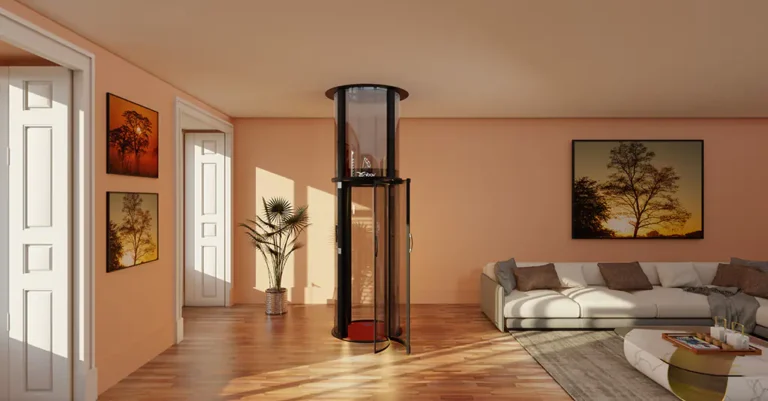
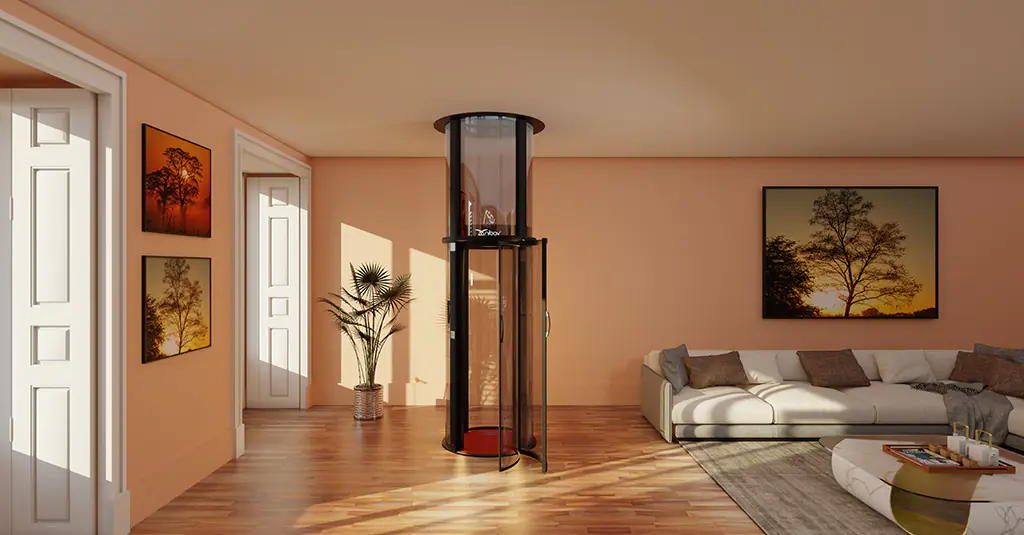
These lifts are particularly attractive for modern homes because certain models feature a self-supporting structure and do not require a conventional lift shaft or machine room.
Advantages:
- No conventional pit or machine room required in suitable models.
- Minimal structural modifications compared with many traditional elevator installations.
- Compact, space-efficient designs.
- Panoramic cabin options.
- Single-phase electrical power in applicable models.
- No hydraulic oil, conventional cables or counterweights.
Considerations:
- Capacity and travel height depend on the selected model.
- Installation requirements should be checked against the property’s layout.
- Homeowners should verify safety certifications and maintenance support.
- Not every pneumatic model is suitable for every building.
For homeowners looking for a modern residential elevator with reduced construction requirements, pneumatic vacuum lifts are worth considering.
Comparison of Different Types of Home Lifts
Understanding the differences between lift technologies makes it easier to shortlist the right option.
| Lift Type | Operating Technology | Installation Considerations |
|---|---|---|
| Hydraulic lift | Hydraulic piston | Equipment space and possible machine room |
| Traction lift | Motor, ropes and counterweight | Shaft and structural preparation |
| Screw-driven lift | Mechanical screw mechanism | Model-specific structural requirements |
| Pneumatic vacuum lift | Air pressure differences | Compact, self-supporting designs available |
The ideal choice depends on your home’s layout, number of floors, accessibility requirements and long-term ownership preferences.
6 Important Factors to Consider Before Buying a Home Lift
Choosing a residential elevator involves more than comparing prices. Consider these six factors before making your decision.
1. Available Installation Space
Measure the available floor area before selecting a lift. Some elevators require dedicated shafts, pits and machine rooms, while certain modern models are designed to occupy less space.
2. Installation and Civil Work
Understand how much construction work is necessary. If you are installing a lift in an existing home, consider options that minimise structural modifications and disruption to your property.
3. Safety Features
Safety should be a priority when purchasing a home elevator. Look for features such as emergency descent, door interlocks, emergency lighting, overload protection and appropriate safety monitoring systems.
Also, check the manufacturer’s safety certifications and installation standards.
4. Capacity and Number of Passengers
Select a lift based on the number of people who will regularly use it. Consider the cabin dimensions, maximum load capacity and wheelchair accessibility if required.
5. Maintenance and Energy Consumption
Compare the maintenance requirements of different lift technologies. Ask about servicing frequency, replacement components, warranty coverage and electricity consumption.
A lift that meets your daily requirements while offering manageable maintenance can provide better long-term value.
6. Design and Home Interiors
A home elevator should complement your property’s interior design. Consider panoramic cabins, transparent panels, lighting, cabin finishes and available customisation options.
Which Type of Lift Is Best for Home Use?
There is no single elevator technology that is ideal for every residential property. Hydraulic and traction lifts can be suitable for homes with appropriate structural provisions, while screw-driven lifts offer another option for specific low-rise applications.
However, pneumatic vacuum lifts are an attractive choice for homeowners who prioritise space efficiency, modern aesthetics and reduced construction requirements.
For example, NIBAV Home Lifts offers air-driven residential elevators designed for modern Indian homes. Their self-supporting designs do not require conventional lift shafts or machine rooms, making them worth considering when planning an elevator for an existing property.
The final selection should always depend on the home’s dimensions, required capacity, number of floors and individual installation conditions.
Why Choose NIBAV Home Lifts?
NIBAV Home Lifts specialises in pneumatic vacuum elevator technology for residential properties. Its home elevators combine modern design with practical features for everyday residential mobility.
Some key advantages include:
- Air-driven pneumatic vacuum technology.
- Self-supporting cabin structures.
- No conventional pit or machine room requirements.
- Panoramic cabin designs.
- Single-phase power compatibility.
- Safety features designed for residential use.
- Options for different home layouts and requirements.
Homeowners can explore the available NIBAV models and compare their specifications to identify a suitable solution for their properties.
Final Thoughts
Selecting the best lift for home use requires careful consideration of installation space, technology, safety, maintenance, capacity and budget. Hydraulic, traction, screw-driven and pneumatic vacuum lifts each offer different benefits depending on the property.
If you are planning to install an elevator in an existing home and want to minimise major structural modifications, pneumatic vacuum lifts are worth exploring.
Before making your final decision, compare multiple models, review their technical specifications, check safety certifications and consult an experienced residential elevator provider.
Looking for a suitable home elevator for your property? Explore NIBAV Home Lifts to discover modern residential elevator solutions designed to make everyday movement more comfortable and convenient.