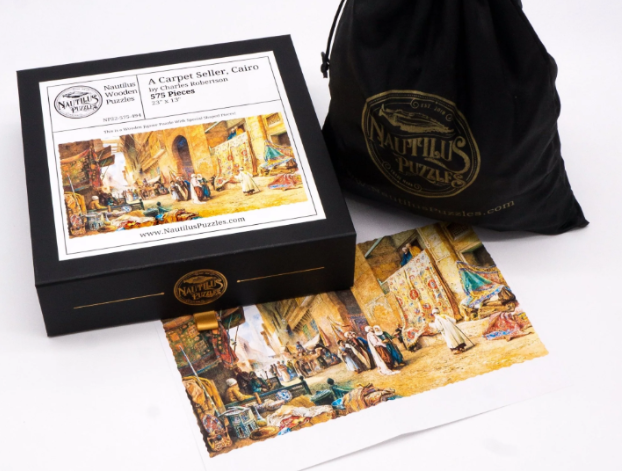
Exploring the past can become more meaningful when learning extends beyond textbooks and traditional reading materials. By combining visual discovery with hands-on activities, history puzzles offer an interactive way to explore historical events, civilizations, artwork, and cultural traditions. These activities encourage individuals to examine visual details, recognize patterns, and develop curiosity about unfamiliar historical subjects. For adults, assembling historically themed artwork can provide an enjoyable recreational experience alongside opportunities for independent learning.
Exploring Historical Subjects Through Visual Learning
Understanding Different Historical Periods
Visual representations can introduce learners to the distinctive characteristics of different eras. Through carefully illustrated history puzzles, individuals can explore ancient civilizations, medieval architecture, Renaissance paintings, and significant developments in modern society. Examining clothing, buildings, transportation, and everyday objects can provide useful starting points for further research.
These visual elements help connect historical information with recognizable features of past societies.
Discovering Art and Cultural Heritage
Historical artwork often reflects the social values, religious beliefs, and artistic traditions of its period. Reconstructing these images encourages closer examination of details that might otherwise go unnoticed.
Popular historical themes include:
- Traditional paintings and artistic masterpieces.
- Historical maps and geographical illustrations.
- Architectural landmarks and monuments.
- Cultural celebrations and everyday activities.
- Portraits of influential historical figures.
Each subject provides opportunities to investigate the circumstances surrounding its creation.
How Puzzle Activities Encourage Active Learning
Developing Observation Skills
Identifying subtle visual differences requires concentration and attention to detail. While assembling history puzzles, participants examine colors, textures, shapes, and recurring patterns that contribute to the complete image. This process encourages deliberate observation rather than passive viewing.
Recognizing architectural features or historical clothing styles may also inspire questions about their significance and origins.
Strengthening Problem-Solving Abilities
Puzzle assembly involves identifying relationships between individual pieces and testing possible arrangements. Participants often develop strategies based on visual similarities, edge shapes, and distinctive image sections.
Although completing recreational activities does not guarantee long-term cognitive improvement, it provides opportunities to practice structured problem-solving and sustained attention.
Popular Historical Themes for Adult Enthusiasts
Ancient Civilizations and World History
Historical illustrations can represent developments across different regions and societies. Themed history puzzles featuring ancient settlements, trade routes, and cultural achievements introduce participants to subjects worth exploring beyond the completed image. Comparing historical depictions with reliable reference materials can provide additional context.
These activities are particularly interesting for individuals who enjoy geography, archaeology, and cultural studies.
Historical Maps and Exploration
Older maps demonstrate how geographical knowledge and cartographic techniques developed over time. Their illustrations may include decorative borders, unfamiliar place names, and historical territorial boundaries.
Examining these details can reveal how earlier societies interpreted the world around them, although historical maps should not be treated as accurate representations of modern geography.
Historical Paintings and Significant Events
Paintings depicting important events can encourage discussions about artistic interpretation and historical accuracy. Participants can investigate whether an artwork was produced during the event or created later as a symbolic representation.
This distinction helps develop a more critical understanding of visual historical sources.
Choosing an Appropriate Difficulty Level
Considering Piece Count and Image Complexity
Difficulty depends on several characteristics beyond the total number of pieces. When selecting history puzzles, consider the variety of colors, intricacy of illustrations, repetitive patterns, and individual piece shapes. Detailed historical scenes may present greater challenges than images containing clearly separated visual areas.
Selecting an appropriate difficulty level helps maintain enjoyment without creating unnecessary frustration.
Making Puzzle Activities More Educational
Researching the Story Behind the Image
A completed illustration can serve as the starting point for deeper historical investigation. After assembling history puzzles, participants can research the featured artwork, historical setting, individuals, or geographical region using reliable educational resources. Comparing multiple sources helps distinguish facts from artistic interpretation.
Keeping brief notes about discoveries can make the activity more memorable.
Creating Opportunities for Shared Learning
Group assembly encourages participants to discuss visual details, exchange historical knowledge, and work toward a common objective. Families, friends, and hobby groups can divide different image sections according to individual preferences.
These shared experiences can introduce alternative perspectives while maintaining an enjoyable social atmosphere.
Conclusion
Combining recreation with historical exploration provides an accessible approach to discovering unfamiliar subjects. Carefully selected history jigsaw puzzles can encourage visual observation, thoughtful problem-solving, and independent research into historical artwork, events, and cultural traditions. Their educational value becomes particularly meaningful when the completed imagery inspires further investigation.
Choosing subjects that reflect personal interests and selecting manageable difficulty levels can make each activity an enjoyable opportunity for continued discovery.