
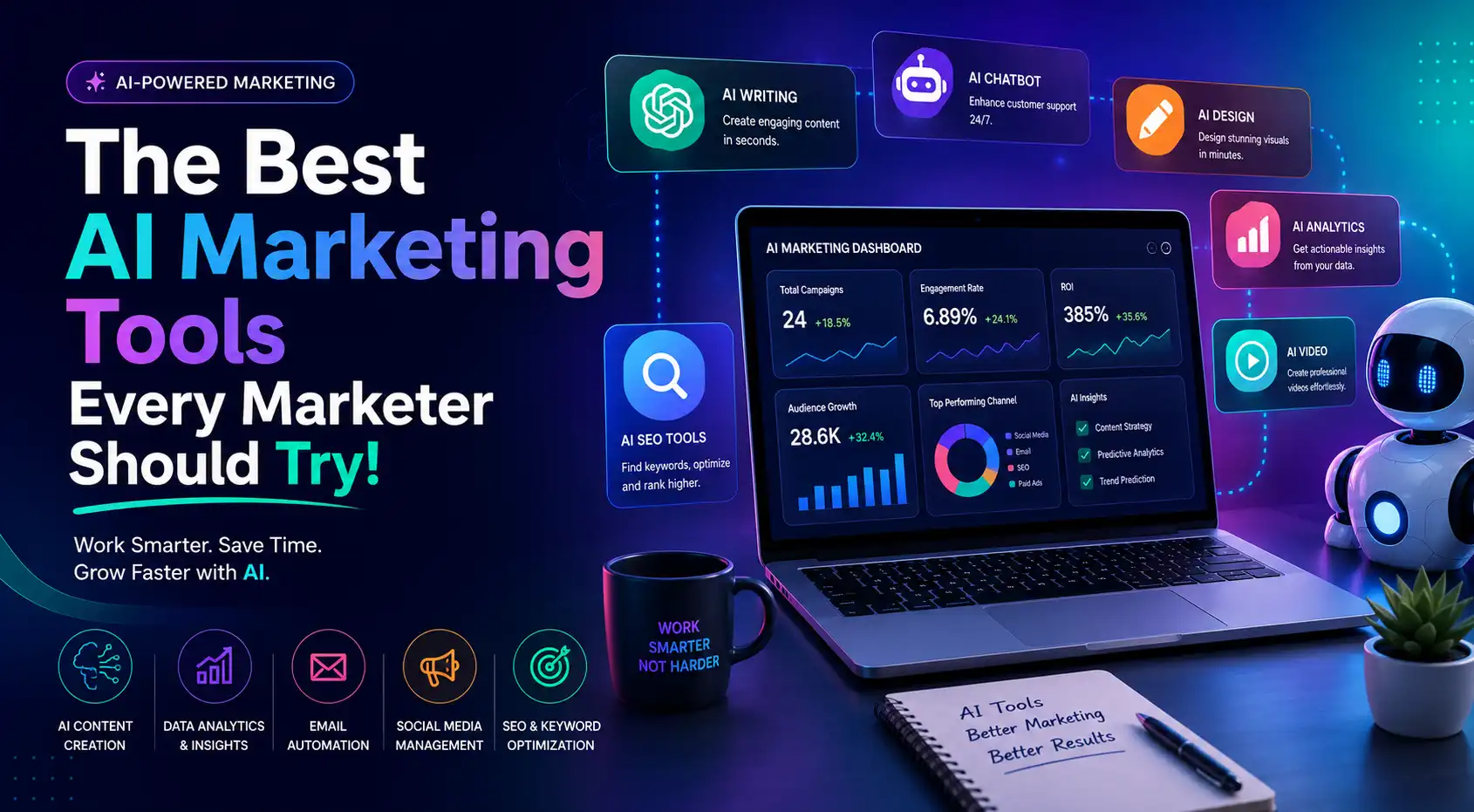
Modern marketing requires balancing speed with personalization, a feat that is nearly impossible without intelligent software. The latest generation of AI-powered platforms allows teams to handle massive data sets, create diverse content formats, and anticipate customer behavior with high precision. Selecting the right tools depends on identifying your specific bottlenecks and choosing solutions that integrate seamlessly into your current workflow.
Automating Content Production and Creative Workflows
Generating high-quality assets at scale remains the most time-consuming aspect of digital strategy. AI tools now assist in writing blog posts, drafting social media captions, and producing visual content, allowing humans to focus on strategy and high-level editing. Using these platforms correctly transforms a multi-day project into an afternoon task.
Consider these functional areas when evaluating content automation software:
-
Generative Text Engines: Use platforms that offer custom training sets to ensure the output matches your specific brand voice and technical requirements.
-
Visual Asset Creation: Leverage tools that convert simple text prompts into high-resolution images, illustrations, or short-form video snippets tailored for specific ad dimensions.
-
SEO Content Optimization: Select applications that analyze top-ranking pages to suggest headers, keywords, and structural improvements for your articles.
-
Dynamic Ad Variation: Employ technology that generates multiple versions of a single advertisement to test which messaging resonates best with specific audience segments.
Advanced Data Analysis and Predictive Insights
Raw data is useless without context. AI-driven analytics platforms interpret complex patterns in user behavior, identifying opportunities that human analysts might miss. These tools allow you to predict how a campaign will perform before you spend a single dollar on ad placement, significantly reducing your risk.
Follow this sequence to maximize the value of your marketing data:
-
Customer Intent Mapping: Utilize predictive platforms to determine where a user is in their buying journey based on their recent browsing habits and interaction history.
-
Churn Prediction Modeling: Deploy software that monitors user engagement signals to alert your team when a customer is likely to cancel or stop purchasing.
-
Spend Optimization Algorithms: Use systems that automatically redistribute your advertising budget toward the channels and creative formats generating the highest conversion rates.
-
Sentiment Monitoring: Apply natural language processing tools to scan mentions of your brand across social platforms, identifying reputation issues as they emerge.
Enhancing Customer Personalization and Engagement
True personalization involves delivering the right message at exactly the right time. AI agents can manage thousands of customer interactions simultaneously, ensuring that nobody is ignored while your team focuses on high-touch relationships. By automating the routine parts of the conversation, you build a foundation of responsiveness that scales alongside your business growth.
Look for tools that offer deep integration with your CRM to ensure that every AI-driven interaction uses accurate, up-to-date customer history. These systems function best when they serve as an extension of your support team, providing answers to common questions, guiding product discovery, and gathering feedback without requiring manual oversight. By reducing friction in the customer journey, these platforms turn simple product discovery into a cohesive, branded experience that encourages repeat engagement.
Conclusion
The value of AI in marketing comes from its ability to handle repetitive tasks while providing deep analytical insights. Whether you are automating your content creation or using predictive models to guide your ad spend, the right technology stack acts as a force multiplier for your existing efforts. Start small by addressing your most significant time-sink, and layer in additional tools as you refine your processes and gain confidence in the output.
FAQs
Will AI tools replace human marketers? No. AI is designed to handle repetitive tasks and data processing. Human judgment, emotional intelligence, and strategic direction remain essential for building a truly resonant brand.
How do I choose between different AI tools? Prioritize tools that solve your current biggest bottleneck. If content production is slow, start there. Avoid signing up for complex suites before you have mastered a single, high-impact tool.
How can I ensure AI output stays on-brand? Use tools that allow for custom styling, brand guidelines, and tone-of-voice training. Always keep a human in the loop for final review and editing before publishing any AI-generated content.
Are these tools suitable for small businesses? Yes. Many AI marketing platforms are designed to be accessible to smaller teams, offering scalable pricing that grows as your marketing volume increases.
What is the biggest risk of using AI in marketing? The biggest risk is over-reliance on automation without human oversight, which can lead to generic or inaccurate content. Always verify data and perform quality checks on all automated outputs.