
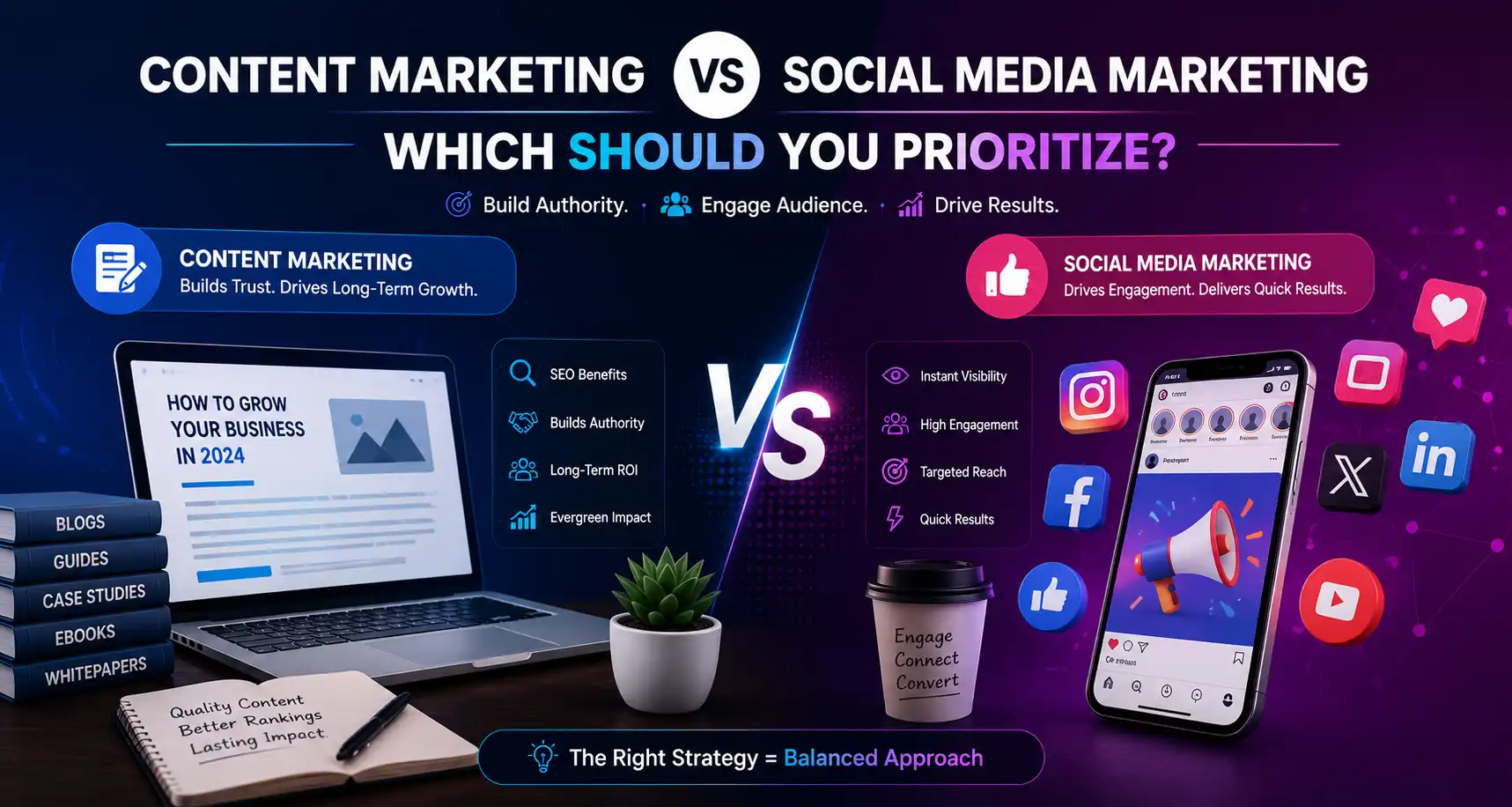
Choosing between content marketing and social media marketing often feels like picking between building a house or throwing a party. Both are vital for long-term business health, but they serve different roles in your growth strategy. Content marketing functions as your brand’s foundational library, while social media marketing acts as the vibrant community hub where you engage with your audience in real-time. Understanding how these two disciplines intersect allows you to allocate resources effectively rather than spreading your efforts too thin.
The Strategic Role of Content Marketing
Content marketing is the process of creating long-form, valuable information that addresses specific customer needs. This strategy prioritizes depth and authority, aiming to capture users who are actively searching for solutions. When you invest in blogs, white papers, or detailed guides, you are building an asset that compounds over time. Because this material lives on your website, you own the platform, the data, and the relationship with the visitor.
Focus on these pillars to maximize the utility of your content strategy:
-
Search Intent Alignment: Structure your content to provide direct, helpful answers to the specific queries your target audience types into search engines.
-
Evergreen Value: Create resources that remain relevant for months or years, ensuring a steady stream of organic traffic without needing constant updates.
-
Authority Building: Establish your brand as a reliable subject matter expert by providing comprehensive, research-backed insights that competitors cannot easily replicate.
-
Lead Nurturing: Use high-value content to guide prospects through the consideration phase of their buying journey, answering their deeper questions before they reach out to sales.
The Tactical Power of Social Media Marketing
Social media marketing focuses on reach, engagement, and immediate community interaction. It is designed to spark conversations, amplify your brand’s personality, and keep you top-of-mind. While content marketing wins on depth, social media wins on speed and accessibility. It allows you to distribute your ideas to a wide audience and get instant feedback on what resonates.
Follow this workflow to integrate social media into your broader strategy:
-
Distribute and Repurpose: Slice your long-form content into bite-sized snippets, infographics, or short videos to drive interest and point users back to your main website.
-
Facilitate Two-Way Dialogue: Use comments and direct messages to listen to customer concerns, answer questions, and humanize your company’s voice.
-
Real-Time Trend Participation: Use social platforms to join relevant industry conversations, showing that your brand is active and aware of current events.
-
Community Building: Create dedicated groups or hashtags where your most loyal customers can interact with each other, fostering a sense of belonging that drives long-term retention.
Balancing Your Efforts for Maximum ROI
The most successful companies do not treat these strategies as separate entities; they view them as a cohesive loop. Content marketing provides the substance, while social media marketing provides the distribution network. Without a solid content library, your social media presence will eventually become shallow and repetitive. Conversely, without social media, your high-quality content may struggle to find an audience.
Your priority should shift based on your current business cycle. Startups often benefit from leaning heavily into social media early on to validate their product and build an initial community through rapid experimentation. As the business matures and becomes more established, the focus must shift toward content marketing to build the search authority and trust required to compete at scale. By aligning these efforts, you ensure that every piece of content you produce is seen by the right people, and every social interaction leads back to a destination where you can convert interest into lasting business value.
Conclusion
You do not need to choose between content marketing and social media marketing; you need to choose the right balance for your current stage of growth. Content provides the depth and search visibility that sustains your business, while social media provides the reach and relationship-building that accelerates discovery. When these two engines work together, they create a powerful cycle that attracts, engages, and retains your audience.
FAQs
Which strategy provides a faster return on investment? Social media marketing often yields faster results in terms of engagement and brand awareness because of its immediate, interactive nature. However, content marketing offers better long-term compounding growth.
Can I run a business using only social media? While possible, it is risky. You do not own your social media followers. If an algorithm changes, you could lose your entire reach overnight, which is why content marketing on your own website is essential.
How do I determine the right ratio of content to social efforts? A balanced approach often starts with a 70/30 split, focusing more on creating high-quality content and then using the remaining time to distribute and engage with that content on social platforms.
What is the best way to repurpose content for social media? Take a single, comprehensive blog post and turn it into a short-form video, a slide deck, a series of text-based posts, and an infographic. This maximizes the value of your initial work.
Does SEO matter for social media marketing? Yes. Modern social platforms are essentially search engines themselves. Using relevant keywords and phrases in your captions, bios, and hashtags helps users discover your content when they search for topics within those platforms.