

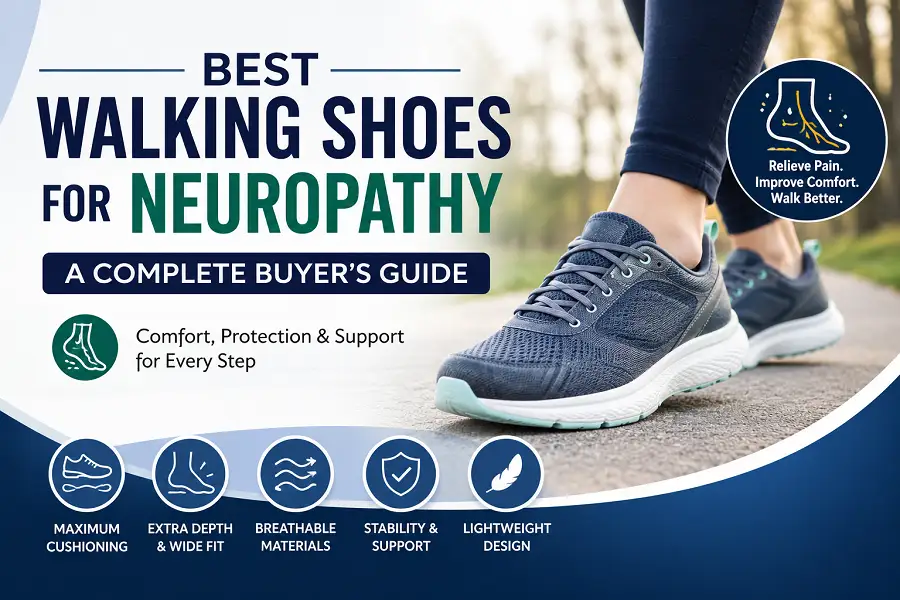
If you’ve ever tried to walk a normal city block while your feet feel like they’re on fire, wrapped in cotton, or asleep — you already know why this question matters so much. What are the best shoes for neuropathy? Short answer: shoes with a wide, deep toe box, seamless interiors, firm (not squishy) cushioning, and no pressure points anywhere near the ball of your foot or your toes. That combination matters more than any brand name printed on the side.
I’ve spent time talking to podiatrists and to people managing diabetic neuropathy day to day, and one thing keeps coming up — most people don’t buy the wrong shoe because they’re careless. They buy it because it looked comfortable in the store for five minutes. Neuropathy doesn’t work that way. A shoe can feel fine walking around a shoe aisle and still leave you with a blister or a pressure sore you don’t even feel forming until it’s a problem.
This guide walks through what actually matters when shopping for neuropathy shoes, picks worth considering for men and women, and a few mistakes that are easy to make even when you’re trying hard to get it right.
Why Ordinary Shoes Fail People With Neuropathy
Numbness and tingling change the rules of shoe shopping completely. When your feet have normal sensation, pain tells you when something’s wrong — a seam is rubbing, a shoe is too tight, a stone got in there. Neuropathy mutes that warning system, sometimes almost entirely.
That’s the real risk. A person without nerve damage would feel a hot spot forming and adjust their sock or loosen a lace. Someone with advanced neuropathy might not notice until there’s a blister, or worse, an ulcer — which is a serious concern for diabetics specifically, since poor circulation can slow healing dramatically.
So the shoe itself has to do the protective work that your nerves normally would.
What Actually Makes a Shoe “Neuropathy-Friendly”
There’s a lot of marketing noise around “diabetic shoes” and “comfort shoes,” and honestly, not all of it is backed by much beyond a good product photo. Here’s what actually matters, based on podiatric guidance and real feedback from people who wear these shoes daily.
Wide, Deep Toe Box
Your toes need room to sit flat without touching the front or sides of the shoe. If you can see the outline of your toes pressing against the fabric, that shoe is out — even if it “feels” fine.
Seamless or Minimal-Seam Interior
Internal seams are one of the most common causes of pressure sores in neuropathy patients. Look for shoes labeled seamless, or at minimum, ones with soft, flat interior stitching.
Firm, Even Cushioning — Not Squishy
This surprises people. A shoe that feels like walking on a marshmallow sounds nice, but overly soft foam can shift unevenly under your foot and create hidden pressure points. Podiatrists generally recommend firmer, more structured midsoles that distribute weight evenly.
Removable Insoles
This one’s practical rather than glamorous. If your doctor prescribes custom orthotics, you need a shoe built to take them out and swap them in — not one where the insole is glued down.
Adjustable Closures
Velcro or wide laces beat slip-ons for most people with neuropathy, simply because you can fine-tune the fit without squeezing anywhere specific.
Breathable, Non-Irritating Materials
Soft leather, knit uppers, and moisture-wicking linings reduce friction and help avoid the kind of skin breakdown that’s especially dangerous for diabetics.
Best Shoes for Diabetics With Neuropathy
Diabetic neuropathy adds another layer of caution because of circulation issues. Shoes marketed specifically as “diabetic shoes” — brands like Orthofeet, Dr. Comfort, and New Balance’s extra-wide diabetic lines — are built around these exact features: extra depth, seam-free linings, and protective toe boxes.
A quick practical tip: many diabetic shoe brands are eligible for reimbursement through Medicare or insurance if your doctor writes a prescription for therapeutic footwear. It’s worth asking — a lot of people don’t realize this benefit exists until they’re already several purchases deep into shoes that didn’t work out.
Best Shoes for Neuropathy — Women
Women often struggle more with this search because so much of the “comfort shoe” market for women still prioritizes narrow, tapered toe boxes for style. A few directions that consistently work well:
- Orthofeet Coral or Sonoma — wide toe box, ergonomic sole, generous depth for orthotics
- New Balance 928v3 — a long-trusted walking shoe with a roomy, motion-control fit
- Vionic walking sneakers — built-in arch support with a soft, seamless lining
- Skechers Go Walk Arch Fit — lighter weight, good for people who want something less clinical-looking
If you want something that doesn’t scream “medical shoe,” Vionic and New Balance tend to strike the best balance between function and looking like a normal sneaker.
Best Men’s Shoes for Neuropathy
Men generally have an easier time finding wide-width options, but fit precision still matters just as much.
- Orthofeet Innovative Stretch or Villa Grande — extra depth, seam-free stretch knit upper
- New Balance 928v3 (men’s) — same reliable structure as the women’s version
- Propét Stability Walker — designed specifically with neuropathy and diabetic feet in mind
- Brooks Addiction Walker — firmer, motion-control sole, popular among people who need extra structural support
One thing I’d flag honestly: some of these shoes aren’t cheap, and they don’t always look like “sneakers” in the fashionable sense. That’s a real trade-off. If style matters a lot to you, you may need to compromise slightly on how clinical the shoe looks in exchange for the protective features you actually need.
Sneakers for Neuropathy vs. Traditional Walking Shoes
People often ask whether sneakers work as well as dedicated walking or diabetic shoes. The honest answer: some do, most don’t — not without modification.
Athletic sneakers from mainstream brands are usually built for a “normal” foot shape and a normal sensory feedback loop. Unless you’re buying a wide or extra-wide version with a soft, seamless upper, standard sneakers can still create friction points you won’t feel forming. If you already have a favorite sneaker brand, check if they offer a wide/extra-wide “comfort” line before ruling it out completely.
A Few Mistakes People Make (Even With Good Intentions)
- Buying shoes at the end of the day without trying them on. Feet swell throughout the day, and neuropathy can mask that swelling. Shop later in the day when your feet are at their largest.
- Assuming “true to size” applies to you. Depth matters as much as length here. Many neuropathy-friendly brands run in half or full sizes larger than standard.
- Skipping the sock test. Bring the socks you’ll actually wear. A shoe that fits with thin socks might feel completely different with the thicker, cushioned socks many people with neuropathy prefer.
- Ignoring the break-in period — or not checking your feet during it. Even a good shoe needs a short adjustment period. Check your feet after the first few wears for any red marks, since you may not feel irritation directly.
The Bottom Line
There’s no single “best” shoe that works for every foot — neuropathy severity, foot shape, and daily activity level all change the answer. What stays consistent is the checklist: wide and deep toe box, seamless interior, firm even support, removable insoles, and adjustable closures. If you check those five boxes, you’re already ahead of most people shopping by brand name alone.
And if your neuropathy is diabetes-related, don’t skip the conversation with your doctor or podiatrist — a prescription for therapeutic shoes can save you real money and often catches fit issues a shoe store clerk simply won’t.
Frequently Asked Questions
1. What are the best shoes for neuropathy?
Shoes with a wide, deep toe box, seamless interior lining, firm and even cushioning, and adjustable closures like Velcro or laces tend to work best across most cases of neuropathy.
2. What are the best shoes for foot neuropathy specifically in the toes?
Look for extra-depth shoes with a rounded, wide toe box — brands like Orthofeet and Propét design specifically around toe pressure relief.
3. What are the best shoes for men with neuropathy?
Orthofeet’s stretch-knit styles, New Balance 928v3, and Propét Stability Walker are commonly recommended for men managing neuropathy symptoms.
4. Are diabetic shoes the same as neuropathy shoes?
Mostly, yes — diabetic shoes are built with the same protective features neuropathy needs, though diabetic-labeled shoes often add extra attention to circulation and skin protection.
5. Can I use regular sneakers if I have neuropathy?
Sometimes, if they’re wide-width with a soft, seamless interior — but most standard sneakers aren’t built with enough depth or protection for moderate to severe neuropathy.
6. How often should I replace neuropathy shoes?
Every 6-12 months is common, especially if you walk daily, since worn-down cushioning can create pressure points you may not feel.
7. Do neuropathy shoes need a prescription?
Not always, but if you have diabetes, a doctor’s prescription can make you eligible for insurance or Medicare coverage on therapeutic footwear.
8. What’s the best shoe width for neuropathy?
Wide or extra-wide is typical, though the exact width depends on your foot shape — it’s worth getting measured rather than guessing.
9. Are memory foam shoes good for neuropathy?
Not always. Very soft foam can shift unevenly and create hidden pressure points; firmer, structured cushioning is often safer.
10. What socks should I wear with neuropathy shoes?
Seamless, moisture-wicking, cushioned socks — ideally without tight elastic bands that restrict circulation.
11. Can neuropathy shoes help prevent foot ulcers?
Yes, properly fitted protective footwear is one of the most effective ways to reduce friction and pressure that lead to ulcers, especially in diabetics.
12. Are Skechers good for neuropathy?
Certain wide-fit Skechers, like the Go Walk Arch Fit line, work reasonably well, though they’re not specifically designed as medical footwear.
13. What’s the difference between women’s and men’s neuropathy shoes?
Mostly sizing and shape — the core features (depth, seamless lining, firm support) stay the same across both.
14. Should I get custom orthotics with neuropathy shoes?
If your podiatrist recommends it, yes — just make sure the shoe you choose has a removable insole to fit them properly.
15. How do I know if a shoe fits right when I can’t feel pressure points?
Check for redness or marks after wearing, shop later in the day, bring your usual socks, and prioritize depth and width over how the shoe “feels” in the moment.