

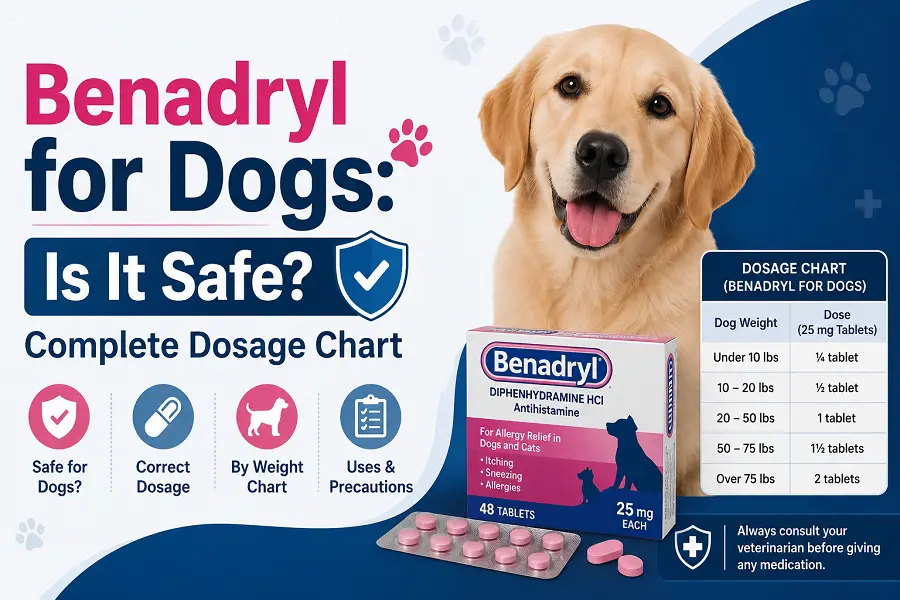
My neighbor’s Labrador, Bruno, once got into a patch of wasps in her backyard. Within twenty minutes his face had puffed up like a water balloon. She called me in a panic asking if she could just give him a Benadryl from her medicine cabinet. The answer was yes — but the “how much” part is where most dog owners get stuck, and honestly, where things can go wrong if you’re not careful.
Benadryl (diphenhydramine) is one of the few human medications vets actually recommend for dogs. But “vet recommended” doesn’t mean “give it however you like.” Let’s get into what’s safe, what’s not, and how to actually measure the right amount.
Is Benadryl Safe for Dogs?
Generally, yes. Diphenhydramine is considered safe for most healthy dogs when dosed correctly. It’s an antihistamine, so it works the same way in dogs as it does in us — blocking histamine to calm down allergic reactions, itching, hives, and mild anxiety symptoms like car sickness or storm phobia.
That said, “safe” comes with conditions. Benadryl isn’t safe for every dog, and it’s not safe in every form. Some Benadryl products — especially liquid formulas and combination cold medicines — contain xylitol or alcohol, both of which are toxic to dogs. Always check the label. Plain diphenhydramine, no added decongestants, no sweeteners, is what you want.
Dogs with certain health conditions should skip it entirely unless a vet says otherwise:
- Glaucoma
- Heart disease
- High blood pressure
- Seizure disorders
- Bladder obstruction or urinary retention issues
- Pregnant or nursing dogs
If your dog falls into any of these categories, call your vet before reaching for the bottle. It’s not worth the guesswork.
Benadryl Dose for Dogs: The Standard Guideline
The commonly cited dosage from veterinary sources is 1 mg per pound of body weight, given two to three times a day. Most standard Benadryl tablets are 25 mg, which is where a lot of the confusion starts — a 25 mg tablet is actually the right dose for a 25-pound dog, not a tiny sliver for every size.
Here’s a rough breakdown to make the math easier:
Benadryl Dosage Chart by Weight
| Dog’s Weight | Approximate Dose (mg) | Tablet Equivalent (25mg tabs) |
|---|---|---|
| 5 lbs | 5 mg | 1/5 tablet |
| 10 lbs | 10 mg | 2/5 tablet |
| 20 lbs | 20 mg | 4/5 tablet |
| 25 lbs | 25 mg | 1 tablet |
| 40 lbs | 40 mg | 1.5 tablets |
| 50 lbs | 50 mg | 2 tablets |
| 75 lbs | 75 mg | 3 tablets |
| 100 lbs | 100 mg | 4 tablets |
This chart is a general reference, not a prescription. Small dogs, senior dogs, and dogs with liver or kidney issues often need a lower dose, and your vet may adjust the amount based on your dog’s specific health picture. When in doubt, start on the lower end and see how your dog responds before working up.
How Much Benadryl Can My Dog Have — Practically Speaking
Numbers on a page are one thing. Actually measuring out a fraction of a tablet for a 12-pound terrier is another. A pill cutter helps a lot here — trying to eyeball a quarter tablet with a kitchen knife is how you end up over- or under-dosing.
For dogs under 10 pounds, some owners prefer the children’s liquid formula because it’s easier to measure precisely with an oral syringe. Just double-check the concentration on the label (usually 12.5 mg per 5 mL) and do the math for your dog’s weight before giving it.
One thing I always tell people: don’t round up “just to be safe.” More Benadryl doesn’t mean better relief — it just means more sedation, and in some cases, more risk.
Can I Give My Dog Benadryl for Itching?
Yes, this is actually one of the most common reasons vets suggest it. Environmental allergies, mild skin irritation, insect bites, and seasonal flare-ups often respond well to diphenhydramine. It won’t fix an underlying skin infection or address the root cause of chronic allergies, but it can take the edge off enough for your dog to stop scratching themselves raw while you figure out what’s triggering it.
Can I Give My Dog Benadryl for Allergies?
Also yes — this includes mild allergic reactions like hives, swelling around the face (like Bruno’s wasp sting), or reactions to vaccines. For anything beyond mild swelling, though — difficulty breathing, vomiting, collapse — that’s an emergency vet visit, not a Benadryl situation. Antihistamines help with histamine-driven symptoms, but they’re not going to reverse anaphylaxis.
How Often Can I Give My Dog Benadryl for Itching?
Standard guidance is every 8 hours, so up to three times a day. Giving it more frequently than that increases the risk of side effects without necessarily improving the itch relief. If your dog needs Benadryl daily for more than a few days, that’s usually a sign the itching has a cause worth investigating — fleas, food sensitivity, environmental allergens — rather than something to keep masking with medication indefinitely.
Side Effects to Watch For
Most dogs tolerate Benadryl well, but keep an eye out for:
- Drowsiness (this is actually expected and often mild)
- Dry mouth
- Urinary retention
- Increased heart rate
- In rare cases, hyperactivity instead of sedation (this happens more in puppies)
If your dog seems unusually lethargic, disoriented, or has trouble breathing after a dose, stop giving it and call your vet or an animal poison control line right away.
When Benadryl Isn’t the Right Answer
I’ve seen owners lean on Benadryl as a catch-all fix for anything itch-related, and it’s worth saying plainly: it’s a short-term tool, not a long-term allergy management plan. If your dog is scratching constantly, losing fur, or developing hot spots, that’s a conversation for your vet — there may be a food allergy, a flea issue, or a skin condition that needs proper treatment rather than a daily antihistamine.
The Bottom Line
Benadryl for dogs is one of those medicine-cabinet staples that’s genuinely useful in the right situation — bug bites, mild allergic swelling, seasonal itchiness, or anxious car rides. The 1 mg per pound guideline gives you a solid starting point, but your vet is still the best resource for confirming the right dose for your specific dog, especially if there are existing health conditions in the picture. When Bruno’s face went back to normal a couple hours after his Benadryl dose, my neighbor still called the vet the next day just to double-check everything was fine. That’s the right instinct — treat it as first aid, not a replacement for professional advice.
FAQs
1. Is Benadryl safe for dogs?
Yes, for most healthy dogs, when dosed correctly and given as plain diphenhydramine without added ingredients like decongestants or xylitol.
2. How much Benadryl can I give my dog?
The general guideline is 1 mg per pound of body weight, up to three times a day, but always confirm with your vet first.
3. How much Benadryl for a dog that weighs 20 pounds?
Roughly 20 mg, or about four-fifths of a standard 25 mg tablet.
4. Can I give my dog Benadryl for itching?
Yes, it’s commonly used for mild itching from allergies, insect bites, or skin irritation.
5. Can I give my dog Benadryl for allergies?
Yes, especially for mild reactions like hives or facial swelling. Severe reactions need emergency vet care instead.
6. How often can I give my dog Benadryl for itching?
Typically every 8 hours, so up to three times a day, unless your vet advises otherwise.
7. Is Benadryl bad for dogs with health conditions?
It can be risky for dogs with glaucoma, heart disease, seizure disorders, or urinary retention issues. Check with a vet first.
8. What form of Benadryl is safest for dogs?
Plain diphenhydramine tablets or the children’s liquid formula, avoiding anything with added decongestants, alcohol, or xylitol.
9. Can puppies take Benadryl?
Some vets allow it in small, carefully calculated doses, but puppies are more prone to unusual reactions like hyperactivity. Always check with a vet first.
10. What are the side effects of Benadryl in dogs?
Drowsiness, dry mouth, urinary retention, and occasionally increased heart rate or hyperactivity.
11. Can too much Benadryl hurt my dog?
Yes, overdosing can cause serious symptoms like rapid heart rate, seizures, or breathing difficulty. Stick to the recommended dose.
12. Does Benadryl make dogs sleepy?
Yes, mild sedation is a common and expected effect, which is why some owners also use it for anxiety during car rides or storms.
13. Can I give my dog Benadryl every day?
Occasional use is generally fine, but daily long-term use should be discussed with a vet to rule out an underlying condition.
14. How long does it take Benadryl to work in dogs?
Usually within 30 minutes to an hour, with effects lasting about 8 hours.
15. Should I call the vet before giving my dog Benadryl?
It’s a good habit, especially for first-time use, dogs with health conditions, or if you’re unsure about the correct dose.