
Fashion Industry Statistics Every Retailer Should Know in 2026
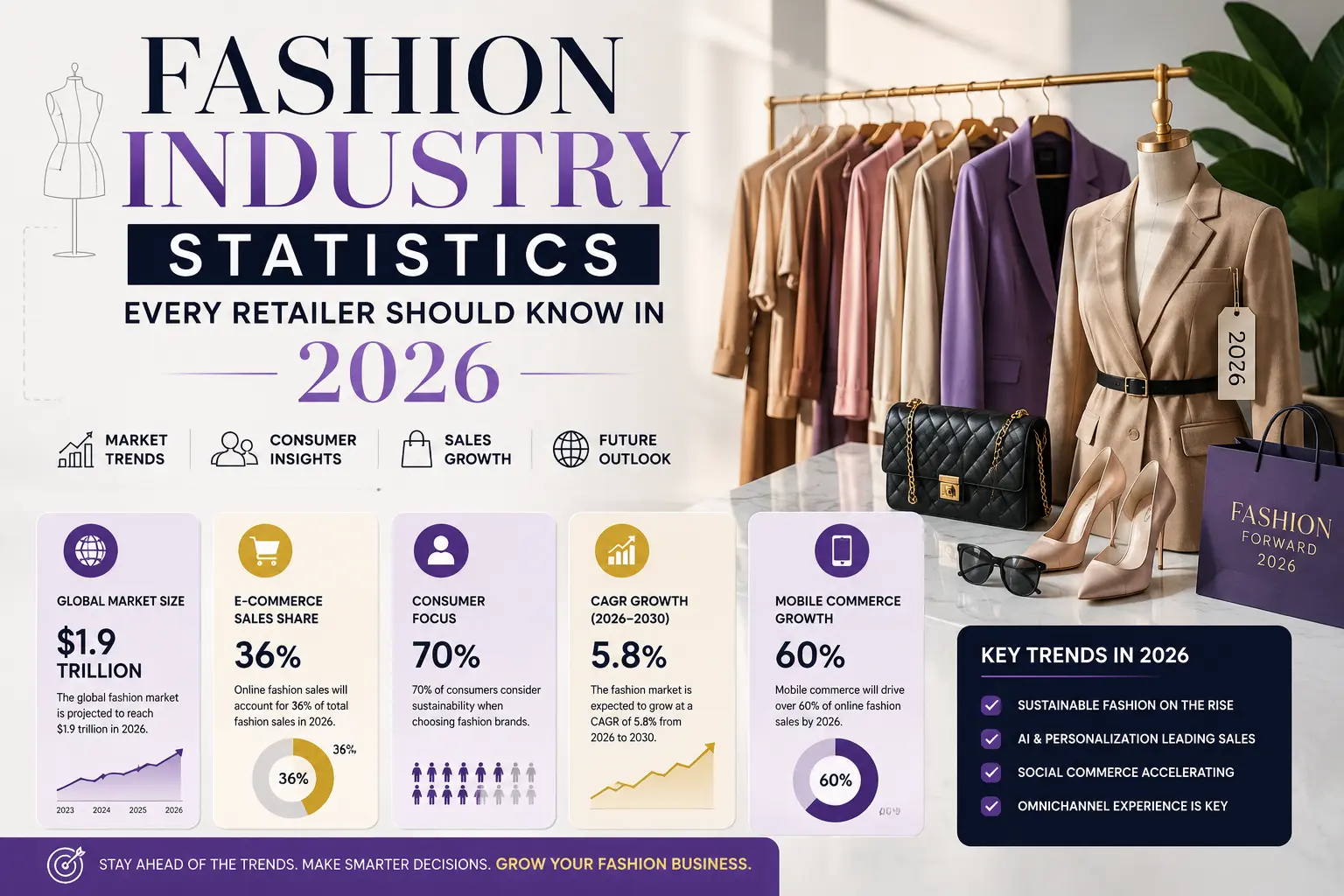
The global fashion landscape in 2026 is defined by a rapid convergence of artificial intelligence, sustainability mandates, and shifting consumer spending habits. Retailers no longer compete solely on design and price; they compete on their ability to integrate digital intelligence into the physical shopping experience. To remain relevant, brands must navigate a complex ecosystem where data transparency and hyper-personalization have become the baseline expectation for the modern shopper.
The Shift Toward AI-Driven Commerce
Artificial intelligence has moved beyond a supporting tool to become the central driver of the retail journey. Shoppers increasingly rely on automated systems to navigate the overwhelming number of choices available, pushing retailers to optimize their digital presence for AI-first environments.
-
Agentic Commerce: Roughly 25% of consumers now express a high likelihood of completing fashion purchases directly through AI-powered assistants that compare products and handle transactions autonomously.
-
Search Discovery: Modern consumers are bypassing traditional search bars in favor of generative AI tools, which provide more relevant, context-aware product discovery.
-
Engagement Metrics: Data indicates that shoppers arriving via generative AI platforms exhibit a 27% lower bounce rate and spend significantly more time engaging with product pages compared to those using standard search engines.
-
Operational Efficiency: AI-integrated inventory management is helping brands reduce stock-related risks by predicting demand shifts in real-time, allowing for faster response times to emerging style trends.
-
Hyper-Personalization: Utilizing machine learning to tailor recommendations has been shown to increase average order values by over 25%, as systems move from generic catalogs to highly curated, style-specific selections.
Crucial Sustainability and Compliance Metrics
Regulation and consumer demand for transparency are forcing a transformation in how fashion companies manage their supply chains. In 2026, sustainability is a strategic imperative that carries significant legal and financial weight.
-
Verifiable Transparency: Nearly 50% of shoppers demonstrate a much higher intent to purchase when product origins and material sustainability can be verified through digital records.
-
The Sustainability Premium: A large segment of the consumer base—roughly 74%—is willing to pay a premium for fashion items that are fully traceable, with a quarter of those buyers accepting price increases of up to 20%.
-
Regulatory Exposure: Compliance is now a high-stakes operational priority; failing to meet new sustainability standards can result in significant financial penalties, with some regulatory bodies capable of fining retailers up to 10% of their global turnover.
-
Green Claims Oversight: Automated monitoring systems are now used by regulatory agencies to scan millions of advertisements for deceptive environmental claims, making “greenwashing” a high-risk strategy that can severely damage brand credibility.
Evolving Consumer Behavior and Channels
The modern shopper is resourceful and values-driven, often splitting their loyalty between budget-friendly options and brands that offer authentic, experiential value. Retailers must be prepared to meet these customers across a fragmented, omnichannel environment.
-
Social Commerce Expansion: Social platforms have become primary storefronts, with global social commerce sales projected to reach $2.9 trillion by the end of this year.
-
Hybrid Shopping Preferences: While digital is dominant, there is a renewed appreciation for human interaction; nearly 75% of consumers report valuing in-store customer service and human guidance during the final purchase stage.
-
Second-Hand Market Growth: The rise of circular fashion continues to capture market share, with second-hand apparel becoming a standard component of the retail mix for mainstream brands.
-
The “Phygital” Experience: Interactive elements, such as smart fitting room mirrors and virtual try-on technology, are successfully bridging the gap between online convenience and physical store engagement.
Conclusion
The fashion industry of 2026 is one where the winners are those who can balance high-tech efficiency with genuine brand purpose. Success requires building supply chains that are both resilient and transparent, while simultaneously leveraging AI to create seamless, personalized journeys for the consumer. By prioritizing these data-backed strategies, retailers can secure their position in an increasingly competitive global marketplace.
FAQs
1. How does “agentic commerce” impact fashion retailers?
Agentic commerce refers to AI agents that can browse, compare, and purchase items on behalf of consumers. Retailers must ensure their product data is optimized for these AI agents to discover and recommend their items effectively.
2. Why are consumers willing to pay more for traceable fashion?
Transparency builds trust. With the introduction of digital product tracking, consumers feel more confident that a product’s sustainability and ethical claims are accurate, which justifies a higher price point for them.
3. Is physical retail still relevant in 2026?
Yes, but its role has changed. Physical stores are increasingly used as fulfillment hubs for rapid delivery and as experiential spaces where technology like smart mirrors creates a “phygital” environment that online shopping cannot fully replicate.
4. How is AI changing marketing for fashion brands?
AI is shifting marketing from broad campaigns to hyper-personalized, one-to-one messaging. It allows brands to analyze individual browsing patterns and past purchases to deliver tailored suggestions, improving both engagement and conversion rates.
5. What is the biggest risk for retailers regarding sustainability today?
The greatest risk is the potential for non-compliance with new environmental regulations and the reputational damage caused by AI-monitored greenwashing. Transparency is no longer optional; it is a regulatory requirement.