

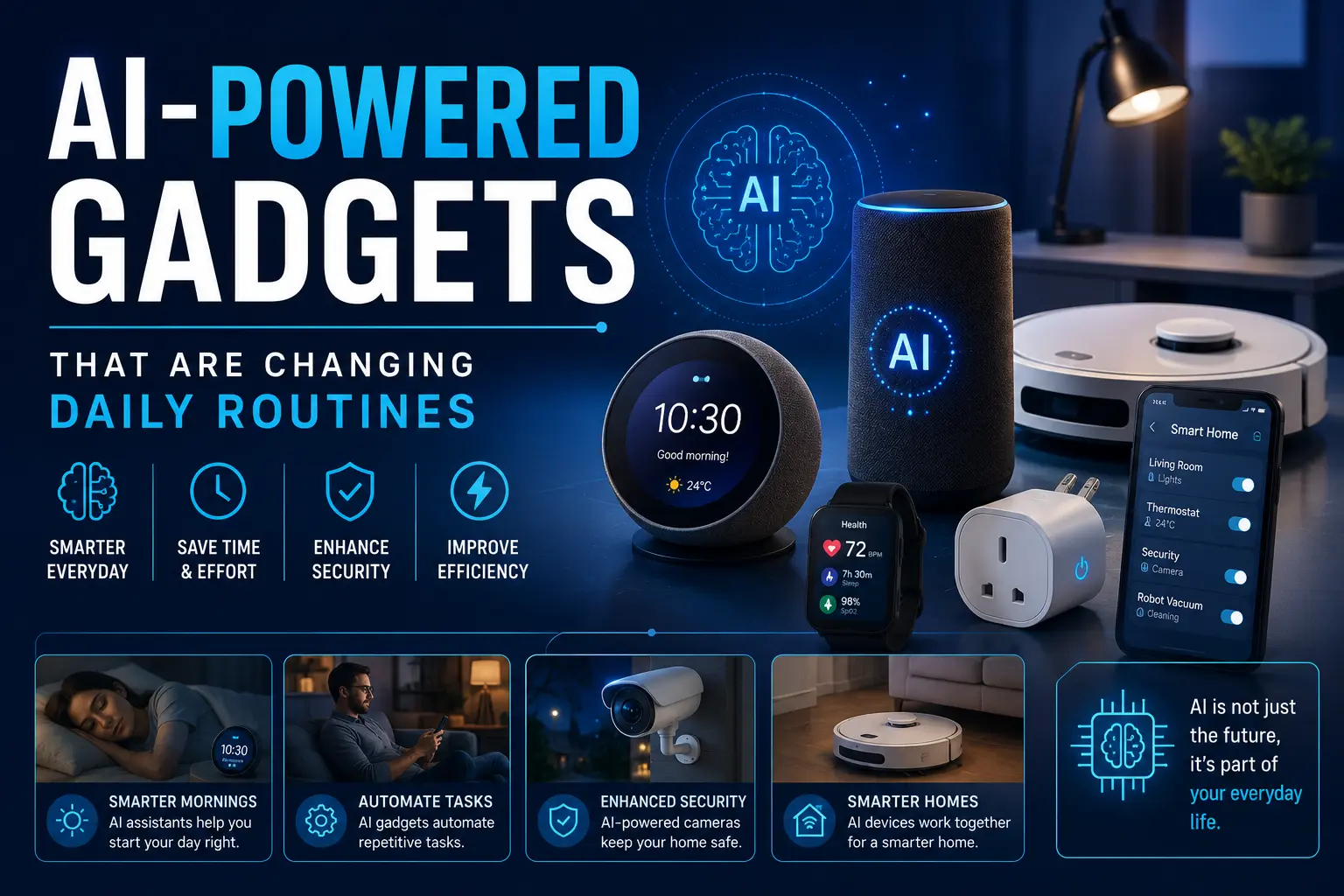
AI-Powered Gadgets That Are Changing Daily Routines
The year 2026 marks a turning point in how we interact with technology. Artificial intelligence has moved beyond software screens and virtual chatbots to become deeply embedded in the physical devices we carry, wear, and use at home. These new AI-powered gadgets no longer just wait for commands; they observe patterns, learn user preferences, and proactively perform tasks to reduce daily friction.
Wearable Tech: Beyond Basic Tracking
Wearables have evolved from simple fitness monitors into intelligent health partners. In 2026, the focus has shifted toward passive, continuous monitoring that provides actionable insights rather than just raw data.
-
Smart Rings for Recovery: Compact smart rings now use advanced sensors to monitor stress levels, sleep architecture, and recovery patterns. By analyzing this data, the devices suggest personalized daily activity goals, helping users avoid burnout before they even feel the fatigue.
-
Context-Aware Smart Glasses: Modern smart eyewear has finally moved into the mainstream. These frames now feature integrated cameras that provide real-time translation, navigation overlays, and object recognition, allowing users to interact with the world through a heads-up display without needing to pull out a smartphone.
-
AI-Enhanced Health Watches: The latest smartwatches now function as preventative health hubs. By integrating generative AI, these devices summarize complex biometrics into plain-language advice, such as recommending specific workout intensities based on your heart-rate variability and recent sleep quality.
Intelligent Home Systems
Smart homes in 2026 are increasingly autonomous. They act as self-managing environments that learn household routines to optimize comfort and energy efficiency without requiring manual input.
-
Autonomous Hubs: Newer smart home brains function as the central decision-making system for the entire residence. By processing voice requests with natural language context, these hubs handle complex, multi-step instructions like “Plan dinner, adjust lighting for a relaxed mood, and remind me when to start cooking” in a single interaction.
-
Predictive Energy Management: Smart systems now communicate between appliances, lighting, and HVAC units to reduce energy consumption automatically. They anticipate when rooms are empty and adjust temperatures accordingly, learning the exact timing of a user’s schedule to ensure the home is comfortable just as they arrive.
-
Enhanced Security Integration: Advanced home security cameras now use local AI processing for faster, more accurate facial recognition. These systems can distinguish between residents, frequent visitors, and unrecognized individuals, providing instant, context-aware notifications that prioritize privacy by processing data on-device.
Productivity Tools That Take Action
The most significant trend in personal productivity is the rise of “agentic” devices—tools that don’t just record information but act on it. These gadgets help bridge the gap between planning and execution.
-
Voice-Activated Note Assistants: Compact wearable pins and recording devices automatically transcribe, summarize, and structure meetings. They identify speakers, highlight action items, and sync directly with digital calendars and task managers, turning chaotic conversations into structured outputs without manual effort.
-
AI-Integrated Content Creators: Tools for creators, such as AI-powered gimbals, now track subjects automatically. They provide professional-grade stabilization and real-time framing suggestions, essentially acting as an automated camera operator for solo creators.
-
Desk Companions: Dedicated productivity gadgets now sit on workstations to monitor focus patterns and block digital distractions. They can learn when you are in a “deep work” state and automatically silence incoming non-urgent notifications to keep your workflow consistent.
Conclusion
The gadgets defining 2026 are characterized by their ability to solve specific problems with minimal user attention. By prioritizing local processing for privacy, multimodal inputs that can “see” and “hear,” and seamless integration with daily life, these AI-powered devices are fundamentally altering our routines. The most successful tools today are those that reduce complexity, proving that the future of technology is not just about doing more, but about doing it more effortlessly.
FAQs
1. How is on-device AI different from cloud-based AI?
On-device AI (or Edge AI) processes data directly on your gadget. This ensures faster response times, reduced latency, and significantly higher privacy, as your personal data does not need to be sent to a cloud server.
2. Do I need a subscription for every AI gadget?
While many manufacturers push subscription models for advanced cloud features, the market is shifting toward devices that offer core functionality locally. Always check if a device requires an ongoing fee for essential tasks before purchasing.
3. What makes 2026 smart home hubs different from older versions?
Modern hubs use sophisticated AI to understand context rather than just fixed keywords. They can handle multi-step requests and learn household habits to make adjustments proactively rather than waiting for specific commands.
4. Are smart glasses finally comfortable for daily use?
Yes. Unlike early prototypes, the latest AI-integrated smart glasses are designed to look and feel like standard eyewear, balancing battery life, weight, and aesthetics to make them suitable for all-day wear.
5. How do I know if an AI gadget is worth the price?
Ask yourself if the gadget reduces “friction” in your day. If the device genuinely saves you time or automates a repetitive, tedious task, the utility usually justifies the investment. Avoid devices that simply add extra layers of interaction to simple tasks.